Experiencing issues with your Quantum Fiber service? This comprehensive guide tackles the most common problems, from slow speeds and connection drops to Wi-Fi dead zones and equipment malfunctions. Discover practical, step-by-step solutions and preventative tips to ensure a seamless, high-speed internet experience in 2025-2026.
Internet Connectivity Issues
One of the most frustrating problems a Quantum Fiber subscriber can face is a complete loss of internet connectivity. This can manifest as no internet at all, or intermittent drops that make online activities impossible. Understanding the potential causes is the first step to restoring your service.
Common Causes of Connectivity Loss
Connectivity issues can stem from a variety of sources, ranging from simple user errors to more complex network problems. In 2025-2026, with the increasing reliance on stable fiber optic connections for remote work, education, and entertainment, these issues are particularly disruptive.
1. Physical Connection Problems
The fiber optic cable itself is the lifeline of your internet service. Damage or disconnections at any point along this chain can lead to an outage. This includes:
- Damage to the Fiber Line: While fiber optic cables are robust, they are not indestructible. Construction work, severe weather, or even animal activity can sometimes damage the buried or aerial lines leading to your home.
- Loose Connections: The connection points where the fiber enters your home and connects to your Quantum Fiber modem/ONT (Optical Network Terminal) must be secure. Vibrations, accidental bumps, or improper installation can cause these to loosen.
- Faulty ONT/Modem: The ONT is the device that converts the optical signal into an electrical signal your router can use. If this device is malfunctioning or has lost power, your internet will go down.
2. Network Outages
Sometimes, the problem isn't within your home but with Quantum Fiber's network infrastructure in your area. These can be caused by:
- Equipment Failures: Larger network equipment at Quantum Fiber's central offices or distribution points can fail.
- Maintenance or Upgrades: Quantum Fiber may schedule maintenance or perform upgrades that temporarily disrupt service in specific regions.
- External Damage: Significant damage to major fiber trunk lines can affect a large number of customers.
3. Router or Wi-Fi Issues (Indirect Connectivity Loss)
While the fiber connection might be active, your internal network could be the culprit. If your router is not functioning correctly or your Wi-Fi signal is weak, it can appear as if the internet is down. We will delve deeper into Wi-Fi issues in a later section.
Troubleshooting Steps for Connectivity Loss
Before contacting Quantum Fiber support, systematically work through these steps to diagnose and potentially resolve the connectivity issue yourself.
Step 1: Check Your Equipment Lights
The lights on your Quantum Fiber ONT and router are crucial diagnostic tools. Consult your Quantum Fiber equipment manual, but generally, you'll look for:
- Power Light: Should be solid green, indicating the device is powered on.
- Internet/Online Light: This light typically indicates a successful connection to Quantum Fiber's network. A solid green or blue light is usually good. A flashing or absent light often signifies a problem.
- WAN/Internet Port Light (on router): If you have a separate router, this light shows connectivity to the ONT.
If critical lights are off, flashing erratically, or showing red, it points to a problem with the device or the incoming signal.
Step 2: Power Cycle Your Equipment
This is the most common and often effective fix for many connectivity problems. It essentially refreshes the connection between your devices and Quantum Fiber's network.
- Unplug the power adapter from your Quantum Fiber ONT.
- If you have a separate router, unplug its power adapter as well.
- Wait for at least 60 seconds. This allows capacitors to discharge and the devices to fully reset.
- Plug the power adapter back into the ONT. Wait for all its lights to stabilize (this can take a few minutes).
- If you have a separate router, plug its power adapter back in and wait for its lights to stabilize.
- Test your internet connection.
Step 3: Check Physical Connections
Ensure all cables are securely plugged in. This includes:
- The power cord to the ONT and router.
- The fiber optic cable connecting to the ONT (ensure it's not kinked or damaged).
- The Ethernet cable connecting the ONT to your router (if applicable).
Step 4: Verify Network Outages
Quantum Fiber typically provides ways to check for local outages. This might be through:
- Quantum Fiber App: Many providers have mobile apps that display service status.
- Quantum Fiber Website: Look for a "Service Status" or "Outage Map" section.
- Social Media: Providers often post updates on platforms like Twitter.
- Calling Support: If you can't access online resources, call Quantum Fiber's customer service.
If there's a known outage, there's little you can do but wait for Quantum Fiber to resolve it.
Step 5: Test with a Wired Connection
To rule out Wi-Fi issues, connect a computer directly to your router (or ONT, if it has Wi-Fi capabilities) using an Ethernet cable. If the internet works via cable but not Wi-Fi, the problem lies with your wireless network. This is a crucial step in isolating the issue.
Slow Internet Speeds
Even when your Quantum Fiber connection is active, experiencing significantly slower speeds than advertised can be just as disruptive, impacting streaming quality, download times, and online gaming. Understanding the causes and solutions for slow speeds is vital for maximizing your fiber optic investment.
Why Are My Quantum Fiber Speeds Slow?
Several factors can contribute to reduced internet speeds on a fiber connection:
1. Bandwidth Saturation (Your Home Network)
Your subscribed speed is the maximum capacity. If multiple devices are simultaneously streaming high-definition video, downloading large files, or engaging in bandwidth-intensive activities, your connection can become saturated, leading to perceived slowness for all users.
2025-2026 Trend: With the rise of 8K streaming, cloud gaming, and increasingly complex smart home ecosystems, home bandwidth demands are higher than ever. A typical household might have 15-30 connected devices, all vying for bandwidth.
2. Wi-Fi Interference and Congestion
As mentioned, Wi-Fi can be a bottleneck. Older Wi-Fi standards, interference from neighboring networks, physical obstructions, and the distance from the router can all degrade wireless speeds. Even with a fast fiber connection, a weak Wi-Fi signal will limit your device's speed.
3. Router Limitations
Your router plays a critical role. An older or underpowered router might not be able to handle the speeds provided by your Quantum Fiber plan, especially if it's a multi-gigabit connection. It might also struggle to manage a large number of connected devices efficiently.
4. Issues with Quantum Fiber's Network
While less common than home network issues, problems further up the Quantum Fiber network can also cause speed degradation. This could include congestion at local network points or issues with their equipment.
5. Device-Specific Problems
Sometimes, the slowness is isolated to a particular device. This could be due to:
- Outdated Network Drivers: Especially on older computers.
- Malware or Viruses: These can consume bandwidth and processing power.
- Background Processes: Software updates or cloud syncing running in the background.
- Hardware Limitations: An older device may not have the capability to process data at gigabit speeds.
6. DNS Server Issues
The Domain Name System (DNS) translates website names into IP addresses. If your DNS server is slow or unresponsive, it can add latency and make websites appear to load slowly, even if your internet speed is fine.
How to Improve Slow Quantum Fiber Speeds
Addressing slow speeds requires a methodical approach, focusing on both your internal network and potential external factors.
Step 1: Run Speed Tests
Use reliable speed test websites (e.g., Speedtest.net, Fast.com) to measure your download and upload speeds. Perform tests at different times of the day and on both wired and wireless connections. Compare these results to your subscribed plan speed.
Example: If you pay for 1 Gbps but consistently get 100 Mbps on a wired connection, there's a significant issue. If you get 950 Mbps wired but only 200 Mbps on Wi-Fi, the problem is likely wireless.
Step 2: Optimize Your Wi-Fi Network
- Router Placement: Position your router in a central, open location, away from obstructions like thick walls, metal objects, and appliances that emit electromagnetic interference (microwaves, cordless phones).
- Channel Selection: Use a Wi-Fi analyzer app to find the least congested Wi-Fi channel in your area and manually set your router to use it.
- Frequency Bands: Utilize the 5 GHz band for devices closer to the router that require higher speeds (streaming, gaming). The 2.4 GHz band has better range but is slower and more prone to interference.
- Update Router Firmware: Ensure your router's firmware is up-to-date.
- Consider a Mesh Wi-Fi System: For larger homes or those with many dead zones, a mesh system (e.g., Eero, Google Nest Wifi, Orbi) can provide consistent coverage and speeds throughout. This is increasingly relevant in 2025-26 as homes become "smarter" and more connected.
Step 3: Power Cycle Your Equipment
As with connectivity issues, a simple power cycle of your ONT and router can often resolve temporary speed glitches.
Step 4: Check for Bandwidth Hogs
Identify which devices or applications are consuming the most bandwidth. You can often see this in your router's administration interface or your operating system's network monitor.
Action: Temporarily pause or limit bandwidth usage for non-essential devices or applications during critical tasks.
Step 5: Test with a Wired Connection
Connect a computer directly to the ONT or router with an Ethernet cable. If speeds are significantly higher wired than wireless, your Wi-Fi is the bottleneck.
Step 6: Upgrade Your Router
If your router is several years old, it might not support the latest Wi-Fi standards (Wi-Fi 6/6E/7) or be capable of handling multi-gigabit speeds. Upgrading to a modern router can make a substantial difference.
Step 7: Change DNS Servers
You can often improve browsing speeds by switching to a public DNS server like Google DNS (8.8.8.8 and 8.8.4.4) or Cloudflare DNS (1.1.1.1 and 1.0.0.1). This is configured in your router's settings.
Step 8: Scan for Malware
Run a thorough scan on your devices to ensure no malware is consuming your bandwidth.
Wi-Fi Performance and Coverage Problems
Quantum Fiber provides the internet connection, but the Wi-Fi network within your home is what delivers that connection to your devices. Poor Wi-Fi performance, including dead zones and slow wireless speeds, is one of the most common complaints, even with a robust fiber backbone.
Understanding Wi-Fi Limitations
Unlike wired Ethernet, Wi-Fi signals are susceptible to various environmental factors and technological limitations:
- Signal Degradation: Wi-Fi signals weaken with distance and are absorbed or reflected by walls, furniture, appliances, and even people.
- Interference: Other wireless devices (microwaves, Bluetooth devices, cordless phones) and neighboring Wi-Fi networks operating on the same frequencies can interfere with your signal.
- Bandwidth Sharing: All devices connected to a single Wi-Fi access point share the available bandwidth.
- Router Capabilities: The quality and range of your Wi-Fi depend heavily on the router's antennas, processing power, and the Wi-Fi standard it supports (e.g., Wi-Fi 5, Wi-Fi 6, Wi-Fi 6E).
Common Wi-Fi Issues and Their Solutions
Let's break down specific Wi-Fi problems and how to address them.
1. Wi-Fi Dead Zones
Description: Areas in your home where the Wi-Fi signal is weak or non-existent, preventing devices from connecting or maintaining a stable connection.
Solutions:
- Router Relocation: Move your router to a more central location, ideally on an upper floor if possible, and away from obstructions.
- Wi-Fi Extenders/Repeaters: These devices capture your existing Wi-Fi signal and rebroadcast it, extending its range. However, they can sometimes halve the available bandwidth.
- Mesh Wi-Fi Systems: This is often the most effective solution for larger homes or complex layouts. A mesh system uses multiple nodes placed strategically throughout your home to create a single, seamless Wi-Fi network with excellent coverage. As of 2025-2026, mesh systems are highly advanced and offer superior performance over traditional extenders.
- Powerline Adapters: These use your home's electrical wiring to transmit network data. You plug one adapter near your router and another in a distant room, then connect a device or a Wi-Fi access point to the remote adapter. Performance can vary depending on your home's wiring.
2. Slow Wi-Fi Speeds (Even Near Router)
Description: Your Wi-Fi connection is present but significantly slower than expected, even when you're close to the router.
Solutions:
- Check Wi-Fi Standard: Ensure your router and devices support modern Wi-Fi standards like Wi-Fi 6 (802.11ax) or Wi-Fi 6E for optimal performance.
- Utilize 5 GHz Band: Connect devices that need speed to the 5 GHz band. If your router offers band steering, it can automatically manage this.
- Reduce Connected Devices: Temporarily disconnect non-essential devices to see if performance improves.
- Router Firmware Update: Ensure your router's firmware is up-to-date.
- Router Reboot: A simple reboot can clear temporary glitches.
- Interference Mitigation: Identify and minimize sources of interference.
3. Frequent Wi-Fi Disconnections
Description: Your devices repeatedly lose their Wi-Fi connection, requiring you to reconnect.
Solutions:
- Check Signal Strength: Ensure your device has a strong Wi-Fi signal. If it's borderline, consider moving closer to the router or using a mesh system.
- Router Stability: Ensure your router is not overheating or experiencing power fluctuations.
- Device Wi-Fi Drivers: Update the Wi-Fi drivers on your computer or other devices.
- Router Channel Congestion: Use a Wi-Fi analyzer to find a less congested channel.
- Interference: Identify and remove potential sources of interference.
4. Inability to Connect to Wi-Fi
Description: Your device cannot find or connect to your Wi-Fi network.
Solutions:
- Verify Network Name (SSID) and Password: Ensure you are trying to connect to the correct network and entering the password accurately.
- Reboot Router and Device: Power cycle both your router and the device you are trying to connect.
- Check if Wi-Fi is Enabled on Device: Ensure the Wi-Fi setting is turned on for your device.
- Router Broadcast SSID: Make sure your router is broadcasting its SSID (network name). This is usually enabled by default.
- MAC Filtering: Check if MAC address filtering is enabled on your router. If so, you'll need to add your device's MAC address to the allowed list.
Optimizing Your Wi-Fi Environment
Beyond specific troubleshooting, consider these general best practices for optimal Wi-Fi performance:
- Router Placement: Central, elevated, and open.
- Channel Selection: Use a Wi-Fi analyzer to pick the least congested channel.
- Band Steering: Leverage 5 GHz for speed, 2.4 GHz for range.
- Regular Reboots: A weekly reboot can prevent many minor issues.
- Firmware Updates: Keep router firmware current.
- Consider a Mesh System: For comprehensive coverage in larger or complex homes.
By understanding these factors, you can significantly improve your home Wi-Fi experience, ensuring you get the most out of your Quantum Fiber connection.
Quantum Fiber Equipment Issues
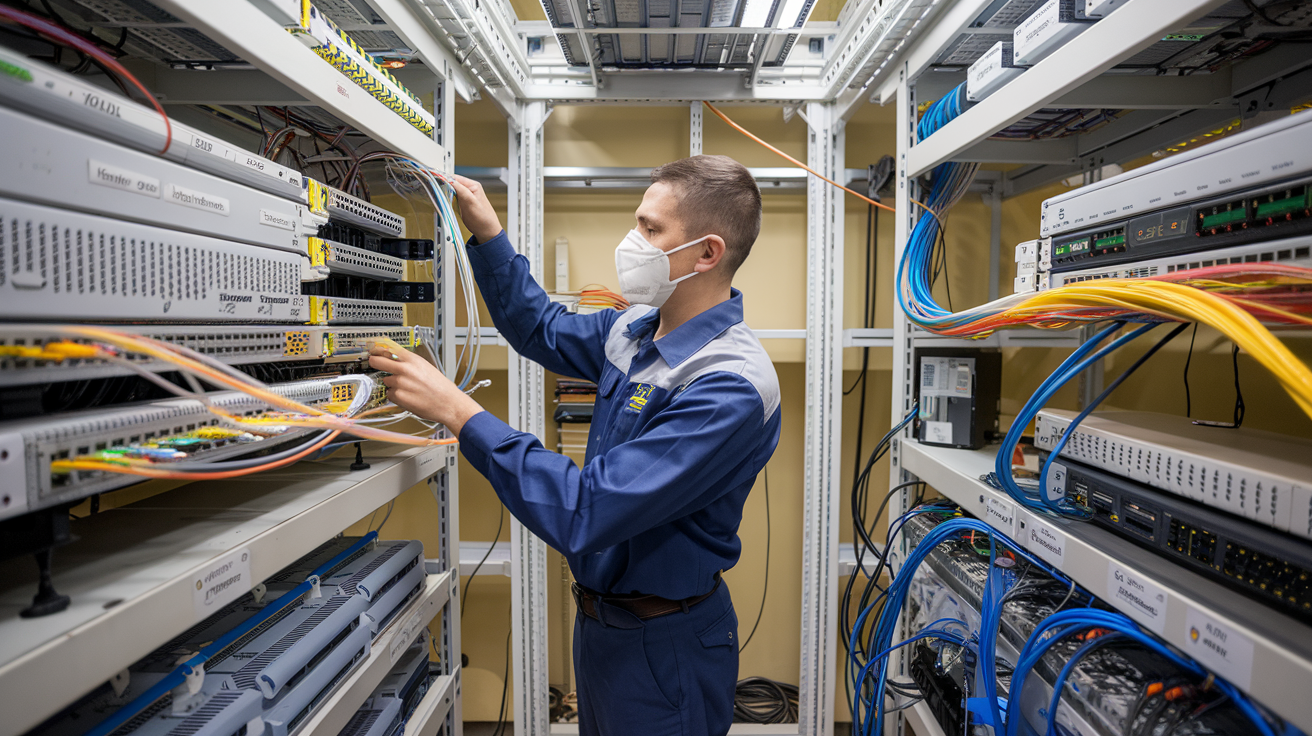
The equipment provided by Quantum Fiber, primarily the Optical Network Terminal (ONT) and potentially a modem/router combo unit, is crucial for your service. Malfunctions or misconfigurations of this equipment can lead to a range of problems, from complete outages to performance degradation.
Understanding Quantum Fiber Equipment
Quantum Fiber typically uses an ONT (Optical Network Terminal) that converts the light signals from the fiber optic cable into electrical signals. This ONT is then connected to your router (either provided by Quantum Fiber or your own) via an Ethernet cable.
- ONT: This is the primary device that terminates the fiber line. It's responsible for the initial signal conversion.
- Router/Gateway: If Quantum Fiber provides a combined unit, it acts as both a modem (in the case of fiber, it's the ONT function) and a Wi-Fi router. If you use your own router, it connects to the ONT.
Common Equipment Problems and Solutions
Let's explore typical issues related to this hardware.
1. ONT Not Powering On or Offline
Symptoms: No lights on the ONT, or the "Power" or "Online" lights are off or red.
Causes:
- Power Supply Failure: The power adapter for the ONT may be faulty or unplugged.
- Electrical Outlet Issue: The outlet the ONT is plugged into might not be working.
- ONT Hardware Failure: The ONT itself may have malfunctioned.
- Power Outage: The most obvious cause, but sometimes overlooked if you have battery backup for other devices.
Solutions:
- Check Power Connections: Ensure the power adapter is securely plugged into both the ONT and a working wall outlet.
- Test Outlet: Plug another device into the same outlet to confirm it's functional.
- Check Battery Backup (if applicable): If your ONT has a battery backup, ensure it's charged and functioning.
- Power Cycle: Unplug the ONT's power for 60 seconds, then plug it back in.
- Contact Quantum Fiber: If the ONT remains unresponsive, it likely needs replacement by a technician.
2. Faulty Ethernet Cable Between ONT and Router
Symptoms: Internet works when directly connected to the ONT (if it has Wi-Fi), but not through your router. Or, intermittent connectivity issues.
Causes:
- Damaged Cable: The Ethernet cable might be kinked, cut, or have damaged connectors.
- Loose Connection: The cable might not be fully seated in the ports.
- Low-Quality Cable: An older or low-quality Ethernet cable might not support the speeds of your fiber connection.
Solutions:
- Reseat Cable: Ensure the Ethernet cable is firmly plugged into both the ONT and the router's WAN port.
- Inspect Cable: Look for visible damage.
- Replace Cable: Try using a known-good, high-quality Ethernet cable (Cat 5e or Cat 6 is recommended for gigabit speeds).
3. Quantum Fiber Provided Router Issues
If Quantum Fiber supplies your router/gateway, it can also be a source of problems.
Symptoms: Slow Wi-Fi, frequent disconnections, inability to connect new devices, router not broadcasting Wi-Fi.
Causes:
- Outdated Firmware: The router's internal software may need an update.
- Hardware Malfunction: The router itself could be failing.
- Overheating: Poor ventilation can cause performance issues.
- Configuration Errors: Incorrect settings might be preventing optimal performance.
Solutions:
- Power Cycle: Reboot the router.
- Check for Firmware Updates: Access your router's admin interface (usually via a web browser) to check for and install firmware updates. Quantum Fiber may push these automatically, but manual checks can be beneficial.
- Factory Reset: As a last resort, you can perform a factory reset on the router. This will erase all custom settings, so you'll need to reconfigure your Wi-Fi name and password. The reset button is usually a small, recessed button on the back or bottom of the router.
- Ensure Ventilation: Make sure the router has adequate airflow and is not covered or in a confined space.
- Contact Quantum Fiber: If the router continues to malfunction, Quantum Fiber may need to replace it.
4. Using Your Own Router with Quantum Fiber
If you choose to use your own router, ensure it's compatible with Quantum Fiber's service. Many ISPs require specific configurations or may have limitations on using third-party equipment, especially for advanced features or multi-gigabit speeds.
Compatibility Check: Always verify that your chosen router supports the speeds your Quantum Fiber plan provides and is compatible with their network technology (e.g., PPPoE or DHCP connection type). For multi-gigabit plans, ensure your router has WAN and LAN ports capable of 2.5 Gbps or higher.
Configuration: You may need to manually configure your router's WAN settings, DNS servers, and other parameters. Consult Quantum Fiber's support documentation for the correct settings.
When to Contact Quantum Fiber Support About Equipment
You should contact Quantum Fiber support if:
- The ONT shows no signs of life after checking power connections and trying a reboot.
- The "Online" or "Internet" light on the ONT remains red or off, and there are no reported network outages.
- You've tried replacing the Ethernet cable between the ONT and router, and the issue persists.
- The Quantum Fiber-provided router consistently exhibits problems after troubleshooting steps like reboots and firmware checks.
Quantum Fiber technicians have diagnostic tools to check the health of your ONT and the signal coming to your home, which are essential for resolving hardware-related issues.
Billing and Account Problems
While not directly related to internet performance, billing and account issues can be just as stressful for Quantum Fiber subscribers. Understanding common problems and how to resolve them can save you time and money.
Common Billing and Account Issues
Here are some frequent concerns:
1. Unexpected Charges or Bill Increases
Description: Your monthly bill is higher than expected, or you see charges you don't recognize.
Causes:
- Promotional Period Ending: Many introductory offers have a set duration, after which the price reverts to the standard rate.
- Added Services: You may have inadvertently subscribed to add-on services (e.g., premium Wi-Fi, security packages).
- Equipment Fees: If you're renting equipment and there's a change in fees.
- Usage-Based Charges (less common with fiber): While rare for fixed-line fiber, some plans might have overage charges for specific services if not unlimited.
- Taxes and Fees: These can fluctuate.
Solutions:
- Review Your Bill Carefully: Compare your current bill to previous ones and look for discrepancies.
- Check Your Service Agreement: Understand the terms of your contract, especially the end date of any promotions.
- Contact Quantum Fiber Billing Department: This is the most direct way to get clarification. Be prepared with your account number and specific questions about the charges.
- Negotiate: If you're a long-time customer, you might be able to negotiate a better rate, especially if competitors offer lower prices.
2. Difficulty Accessing Your Online Account
Description: You can't log in to your Quantum Fiber online portal to manage your account or view your bill.
Causes:
- Incorrect Username/Password: The most common reason.
- Account Lockout: Too many failed login attempts can lock your account for security.
- Website Glitches: The Quantum Fiber website itself might be experiencing technical issues.
- Account Deactivation: If there was an issue with service cancellation or transfer.
Solutions:
- Use "Forgot Password" or "Forgot Username" Links: These are usually available on the login page and will send recovery instructions to your registered email or phone number.
- Clear Browser Cache and Cookies: Sometimes browser data can cause login issues.
- Try a Different Browser or Device: To rule out browser-specific problems.
- Contact Quantum Fiber Customer Support: They can help reset your credentials or investigate account status.
3. Incorrect Service Information
Description: Your account details (e.g., subscribed speed, services) don't match what you believe you signed up for.
Causes:
- Data Entry Errors: Mistakes made during the initial sign-up process.
- Service Changes Not Processed: If you requested an upgrade or downgrade that wasn't correctly applied.
- Misunderstandings During Sales Calls: Sometimes details can be miscommunicated.
Solutions:
- Review Your Original Order Confirmation: This document is key evidence.
- Compare with Your Bill: Ensure the billed services match your understanding.
- Contact Quantum Fiber Sales or Customer Service: Clearly explain the discrepancy and provide your order confirmation details.
4. Issues with Payments
Description: Your payment isn't being processed, or you're receiving late payment notices despite making a payment.
Causes:
- Expired Payment Method: Credit card expired, or bank account details changed.
- Insufficient Funds: Bank account or credit limit insufficient.
- Payment Processing Errors: Technical issues with Quantum Fiber's payment gateway or your bank.
- Payment Sent to Wrong Place: If paying by mail.
Solutions:
- Update Payment Information: Log in to your online account and ensure your payment details are current.
- Check Bank/Card Statement: Verify if the payment was attempted and if there were any bank-side rejections.
- Contact Quantum Fiber Billing: Inform them of the issue and ask for confirmation of payment receipt or details on processing errors.
- Keep Payment Records: Always retain receipts or confirmation numbers for payments made.
Tips for Managing Your Quantum Fiber Account
- Go Paperless: Opt for online billing and account access to stay updated and reduce paper clutter.
- Set Up Auto-Pay: If you have a stable payment method, auto-pay can prevent missed payments and late fees.
- Regularly Review Bills: Make it a habit to check your bill each month for any unexpected changes.
- Keep Records: Save emails, order confirmations, and bills for at least a year.
- Know Your Contract: Understand the terms, pricing, and duration of your service agreement.
Proactive account management and clear communication with Quantum Fiber's billing department are key to avoiding and resolving these types of issues.
Advanced Troubleshooting and When to Call Support
While the previous sections cover most common issues, sometimes you might encounter more complex problems or reach a point where self-troubleshooting isn't enough. Knowing when and how to escalate your issue to Quantum Fiber support is crucial for a swift resolution.
When to Escalate to Quantum Fiber Support
You've exhausted basic troubleshooting steps, and the problem persists. This is the primary indicator. Specifically:
- Complete Internet Outage: After power cycling your equipment and confirming there are no local outages reported by Quantum Fiber, if you still have no internet.
- Persistent Slow Speeds: If speed tests consistently show speeds far below your subscribed plan, even on a wired connection, and you've tried optimizing your network.
- Intermittent Connectivity: If your internet connection drops frequently despite stable equipment and no obvious environmental factors.
- Equipment Malfunctions: If the ONT or Quantum Fiber-provided router shows no signs of life, has persistent error lights, or fails after a factory reset.
- Billing Disputes: If you cannot resolve a billing discrepancy through online self-service or initial customer service interactions.
- Service Degradation After Network Events: If your service quality significantly dropped after a known local network event or maintenance.
Preparing for Your Call to Quantum Fiber Support
To make your support call as efficient as possible, gather the following information:
- Account Number: Have it readily available.
- Contact Information: Your name, phone number, and best time to reach you.
- Equipment Details: Make, model, and serial number of your ONT and router (if Quantum Fiber provided). Note the status of all indicator lights.
- Problem Description: Be specific. When did the issue start? What are the exact symptoms?
- Troubleshooting Steps Taken: List everything you've already tried (e.g., "I power cycled the ONT and router," "I tested with a wired connection," "I ran speed tests and got X Mbps"). This prevents support from asking you to repeat basic steps.
- Frequency and Timing: Is the issue constant, intermittent, or does it happen at specific times?
- Number of Devices Affected: Is it one device or all devices?
- Any Recent Changes: Did the problem start after a power surge, a new device was added, or a change in your home setup?
What to Expect During a Support Call
Quantum Fiber support agents are trained to follow a structured troubleshooting process. They will likely:
- Verify Your Account: Confirm your identity.
- Check Network Status: Look for known outages in your area.
- Remote Diagnostics: They may be able to remotely check the status of your ONT and signal levels.
- Guide You Through Troubleshooting: They might ask you to repeat some steps you've already done, but this is to confirm their findings.
- Escalate to a Technician Visit: If remote diagnostics and troubleshooting don't resolve the issue, they will schedule a visit from a Quantum Fiber technician.
Understanding Technician Visits
If a technician visit is scheduled:
- Be Available: Ensure someone over 18 is home during the appointment window.
- Provide Access: The technician will need access to the ONT, where the fiber enters your home, and potentially your router.
- Communicate Clearly: Explain the problem in detail to the technician.
- Ask Questions: Don't hesitate to ask the technician what they are doing and what they found.
Technicians can diagnose issues with the external fiber line, the ONT installation, and internal wiring if applicable. They carry specialized equipment to test signal strength and identify physical line problems.
Advanced Troubleshooting Concepts (For the Technically Inclined)
If you're comfortable with networking, you might explore these:
- Traceroute: Use the `traceroute` (or `tracert` on Windows) command in your command prompt to identify where latency or packet loss is occurring between your device and a destination server. This can help pinpoint if the issue is within your home network or further out.
- Ping Tests: Regularly ping your router and a reliable external server (like Google's DNS 8.8.8.8) to monitor latency and packet loss.
- Router Logs: Many advanced routers keep system logs that can provide clues about errors or connection events.
When to Consider Switching Providers
While Quantum Fiber aims for high reliability, if you consistently face unresolved issues, experience prolonged outages, or find the support unsatisfactory, it might be time to explore other providers in your area. However, always ensure you've exhausted all troubleshooting and support channels with Quantum Fiber first.
By approaching troubleshooting systematically and knowing when to seek professional help, you can minimize downtime and ensure you're getting the best possible performance from your Quantum Fiber service.
Experiencing Quantum Fiber issues can be frustrating, but most problems are resolvable with a systematic approach. From connectivity drops to slow speeds and Wi-Fi dead zones, understanding the underlying causes allows for effective troubleshooting. Always start with basic steps like power cycling equipment and checking connections. For Wi-Fi issues, optimizing router placement and considering a mesh system are key. If equipment malfunctions or billing disputes arise, direct communication with Quantum Fiber support is essential. By preparing for support calls with detailed information and understanding the troubleshooting process, you can expedite resolutions and ensure a reliable, high-speed internet experience.