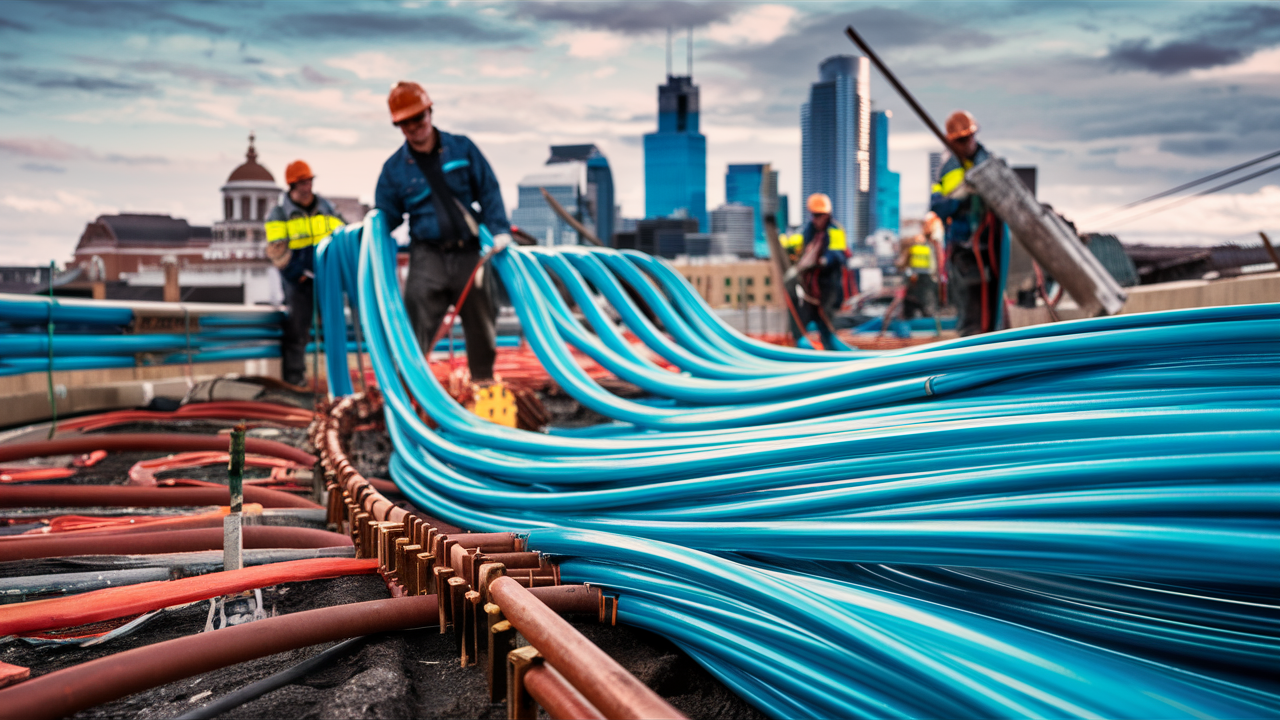
Yes, AT&T is actively replacing its aging copper network with fiber optics. This comprehensive upgrade is driven by the demand for faster, more reliable internet, a trend that will only accelerate in 2025-26. Discover what this means for your service.
Understanding the Shift: Copper vs. Fiber
For decades, the backbone of telecommunications, including internet and phone services, has relied on copper wiring. These metallic conductors, typically made of copper, have served us admirably, enabling the transmission of electrical signals over distances. However, as our digital lives become increasingly data-intensive, the limitations of copper are becoming starkly apparent. Copper networks are susceptible to electromagnetic interference, signal degradation over longer distances, and are inherently limited in the bandwidth they can carry. This means slower speeds, less reliable connections, and an inability to keep pace with the growing demands for high-definition streaming, online gaming, cloud computing, and the burgeoning Internet of Things (IoT).
Fiber optics, on the other hand, represent a revolutionary leap forward. Instead of transmitting electrical signals through metal wires, fiber optic cables transmit data as pulses of light through thin strands of glass or plastic. This fundamental difference unlocks a world of possibilities. Light travels at incredible speeds and is virtually immune to electromagnetic interference. The glass strands can carry significantly more data over much longer distances with minimal signal loss. This translates directly into higher internet speeds, lower latency (which is crucial for real-time applications), and a far more stable and reliable connection.
The transition from copper to fiber is not merely an upgrade; it's a fundamental architectural change in how data is delivered. It’s akin to moving from a dirt road to a multi-lane superhighway. The capacity, speed, and reliability improvements are transformative. In the context of AT&T, this shift is a strategic imperative to remain competitive and meet the evolving needs of its customer base in the coming years.
The Limitations of the Copper Network
The copper network, often referred to as the "last mile" infrastructure, was designed for a different era of communication. Its limitations are multifaceted:
- Bandwidth Constraints: Copper wires have a finite capacity for carrying data. As more devices connect and data demands increase, this capacity becomes a bottleneck, leading to slower speeds, especially during peak usage times.
- Signal Degradation: Electrical signals traveling through copper wires weaken over distance. This necessitates the use of signal boosters and limits the effective range of high-speed services without significant infrastructure investment.
- Susceptibility to Interference: Copper cables can be affected by external electromagnetic fields from power lines, appliances, and even lightning strikes, leading to intermittent service and data errors.
- Maintenance and Durability: Copper is prone to corrosion and physical damage, requiring ongoing and costly maintenance to ensure optimal performance. It is also more susceptible to power surges.
- Asymmetrical Speeds: Many older copper-based DSL technologies offer significantly slower upload speeds than download speeds, which is a growing problem for video conferencing, cloud backups, and content creation.
The Advantages of Fiber Optics
Fiber optic technology addresses these limitations head-on:
- Unprecedented Speeds: Fiber can support symmetrical download and upload speeds that are orders of magnitude faster than copper. We're talking gigabit speeds and beyond, enabling seamless 4K/8K streaming, instantaneous downloads, and lag-free online gaming.
- Exceptional Reliability: Because fiber transmits data as light, it is immune to electromagnetic interference, ensuring a more stable and consistent connection.
- Longer Distances, Less Degradation: Light signals in fiber can travel much farther than electrical signals in copper without significant loss of quality, reducing the need for repeaters and simplifying network architecture.
- Increased Bandwidth Capacity: Fiber optic cables have an almost limitless capacity for data transmission, future-proofing networks for the ever-increasing demands of emerging technologies.
- Enhanced Security: It is more difficult to tap into fiber optic cables without detection compared to copper, offering a layer of inherent security.
- Durability: While glass, fiber optic cables are surprisingly robust and less prone to the environmental degradation that affects copper.
AT&T's Fiber Initiative: The "Project Rewire" & Beyond
AT&T has been a significant player in the telecommunications landscape for over a century, and its current strategy heavily emphasizes the transition to fiber optics. While there isn't a single, universally publicized initiative named "Project Rewire" that encompasses their entire fiber build-out, the company has consistently invested billions of dollars in expanding its fiber footprint. This is a multi-year, ongoing effort that aims to replace much of its legacy copper infrastructure with a more robust and future-proof fiber-to-the-premises (FTTP) network.
AT&T's fiber expansion is not a brand-new concept but rather an acceleration and scaling of a strategy that has been in motion for years. The company recognizes that its competitive edge, and indeed its future viability, depends on providing the fastest and most reliable internet service possible. This involves not just upgrading existing lines but also building new fiber optic infrastructure to areas that have historically been underserved or only had access to slower DSL technology.
Strategic Drivers for AT&T's Fiber Investment
Several key factors are driving AT&T's aggressive fiber deployment:
- Market Competition: Competitors like Verizon, Google Fiber, and numerous smaller regional providers are also heavily investing in fiber. To maintain and grow its market share, AT&T must offer comparable or superior fiber services.
- Customer Demand: Consumers and businesses are increasingly demanding higher bandwidth for streaming, remote work, online education, and entertainment. AT&T's fiber offerings, often branded as "AT&T Fiber," cater directly to this demand.
- Technological Obsolescence of Copper: The copper network is aging and increasingly expensive to maintain. Replacing it with fiber offers long-term cost savings and operational efficiencies.
- Future-Proofing: Fiber optic technology has a much longer lifespan and greater scalability than copper. Investing in fiber now positions AT&T to handle future technological advancements and data demands.
- Government Initiatives and Funding: While not the sole driver, government programs aimed at expanding broadband access, particularly in rural and underserved areas, can provide incentives and funding for fiber deployment.
The Scope of AT&T's Fiber Network
AT&T's fiber network, often referred to as AT&T Fiber, is one of the largest in the United States. The company has been strategically expanding its fiber footprint across both urban and suburban areas, and increasingly, in some rural communities. The goal is to bring fiber optic connections directly to homes and businesses (FTTH/FTTB), bypassing the limitations of older copper-based technologies like DSL. This involves significant infrastructure work, including laying new fiber optic cables, often through aerial installations or underground conduits.
As of early 2025, AT&T has publicly stated its commitment to expanding its fiber availability to millions of new locations. The company's investor reports and public statements consistently highlight fiber expansion as a core strategic priority. While exact figures for copper replacement are not always explicitly detailed, the overall expansion of fiber implicitly signifies the phasing out of copper in those newly served areas. The company aims to offer multi-gigabit speeds, with plans to deploy even faster services as the technology matures.
The replacement process is not instantaneous. It's a phased approach, often prioritizing areas with the highest demand or where existing copper infrastructure is nearing the end of its useful life. This means that while some areas might see a complete transition relatively quickly, others will remain on copper for a longer period as AT&T works through its deployment schedule.
The Tangible Benefits of Fiber Optic Internet
The shift from copper to fiber isn't just a technical upgrade; it translates into significant, real-world benefits for end-users. These advantages are crucial for understanding why AT&T and other providers are making such a substantial investment in fiber technology.
Speed and Performance
This is perhaps the most immediate and noticeable benefit. Fiber optic internet offers dramatically higher speeds compared to copper-based DSL or even older cable internet technologies. As of 2025, AT&T Fiber is widely available with plans offering symmetrical download and upload speeds of up to 1 Gbps (1000 Mbps), and in many areas, up to 2 Gbps and even 5 Gbps. This means:
- Faster Downloads and Uploads: Large files that might have taken hours to download on copper can be downloaded in seconds or minutes on fiber. Uploading large video files or backing up to the cloud becomes significantly faster.
- Seamless Streaming: Enjoy 4K and even 8K video streaming without buffering or interruptions, even with multiple devices connected simultaneously.
- Lag-Free Online Gaming: Lower latency (ping) provided by fiber is critical for competitive online gaming, offering a smoother and more responsive experience.
- Efficient Remote Work: High-speed, reliable internet is essential for video conferencing, accessing cloud-based applications, and collaborating effectively from home.
Reliability and Stability
Fiber optic cables are far less susceptible to external interference than copper wires. This means a more stable and consistent internet connection, even during periods of high network traffic or adverse weather conditions. The benefits include:
- Fewer Disconnections: Experience a more robust connection that is less prone to dropping, which is vital for critical tasks like online banking, remote work, and telemedicine.
- Consistent Speeds: Unlike copper, fiber speeds are less affected by distance from the central office or the number of users in a neighborhood. You're more likely to get the speeds you pay for, consistently.
- Immunity to Electrical Interference: Fiber optic cables do not carry electrical signals, making them immune to interference from power lines, radio waves, or other electrical noise that can plague copper networks.
Future-Proofing and Scalability
The infrastructure built with fiber optics is designed for the future. The capacity of fiber is so vast that it can easily accommodate the increasing data demands of emerging technologies for years to come. This means that once fiber is installed, it's likely to serve your internet needs for a very long time without requiring another major infrastructure overhaul.
- Support for Emerging Technologies: Fiber is essential for technologies like augmented reality (AR), virtual reality (VR), smart homes with numerous connected devices, and the continued growth of AI-driven applications.
- Higher Bandwidth Potential: As technology advances, fiber optic cables can be upgraded to support even higher speeds and greater bandwidth without needing to replace the physical cables themselves.
Cost-Effectiveness (Long-Term)
While the initial investment in fiber deployment is substantial, it offers long-term cost benefits for both providers and consumers. For providers, fiber requires less maintenance, is more durable, and consumes less power than copper networks. For consumers, the increased reliability and performance can translate into fewer service calls, less downtime, and the ability to utilize services that might not be feasible on slower connections.
Impact on Existing AT&T Copper Customers
For AT&T customers currently relying on copper-based DSL or older phone lines for their internet service, the ongoing fiber deployment means potential changes are on the horizon. The transition from copper to fiber is a gradual process, and the impact will vary depending on your location and AT&T's deployment schedule.
The Phased Transition
AT&T is not flipping a switch to instantly convert all its copper customers to fiber. Instead, it's a strategic, phased rollout. This means:
- Area by Area: Fiber deployment typically happens on a neighborhood or street-by-street basis. As AT&T installs new fiber optic cables in your area, your existing copper infrastructure in that segment will eventually be decommissioned.
- Prioritization: The company likely prioritizes areas based on factors like population density, existing infrastructure condition, competitive landscape, and potential for high adoption rates.
- Notice and Communication: Customers in areas slated for fiber conversion are usually notified in advance by AT&T. This communication typically outlines the benefits of fiber, available plans, and the timeline for the transition.
What Happens to Your Copper Service?
As AT&T brings fiber to your neighborhood, the company will encourage existing customers to upgrade. The ultimate goal is to migrate as many customers as possible from the copper network to the fiber network. In areas where fiber is fully deployed and operational, AT&T may eventually discontinue support for its older copper-based internet services.
- Upgrade Encouragement: AT&T will likely offer incentives, special pricing, or bundled deals to encourage copper customers to switch to fiber.
- Service Discontinuation: While AT&T hasn't announced a specific end-of-life date for its copper network nationwide, it is a widely understood industry trend that older copper infrastructure will eventually be retired as fiber becomes the dominant technology. This could mean that copper-based DSL services may become unavailable or significantly degraded in areas where fiber is the primary offering.
- Phone Service Considerations: For customers who still use their AT&T landline phone service over copper, the transition to fiber often involves migrating to Voice over IP (VoIP) services, which run over the internet connection. This is typically part of the AT&T Fiber bundle.
Potential for Service Interruption
During the construction phase of fiber deployment, there might be temporary disruptions. This could include:
- Construction Noise and Activity: Laying new cables, whether underground or aerial, involves construction work that can cause temporary inconveniences.
- Brief Service Outages: When your specific connection is being transitioned from copper to fiber, there will likely be a period of planned downtime. AT&T aims to minimize this disruption and usually schedules these transitions during off-peak hours, providing advance notice.
It's crucial for existing AT&T copper customers to stay informed about AT&T's communications regarding fiber deployment in their area. Proactively checking for fiber availability and understanding the upgrade process can help ensure a smooth transition to faster, more reliable internet.
How to Check AT&T Fiber Availability at Your Address
The most direct and accurate way to determine if AT&T Fiber is available at your specific location is to use AT&T's official online tools. This process is designed to be straightforward and should be your first step if you're looking to upgrade or move to an area with fiber service.
Step-by-Step Guide to Checking Availability
- Visit the AT&T Website: Navigate to the official AT&T website. You can typically find sections dedicated to internet services, often labeled "Internet," "AT&T Fiber," or "Check Availability."
- Enter Your Address: Look for a prominent search bar or button that prompts you to enter your service address. You will need to provide your full street address, including city, state, and zip code.
- Initiate the Search: Click the "Check Availability," "Find Plans," or similar button. The system will then query AT&T's database for your specific location.
- Review the Results:
- If Fiber is Available: The website will display the AT&T Fiber plans available at your address. This will typically include information on available speeds (e.g., 300 Mbps, 1 Gig, 2 Gig, 5 Gig), pricing, and any current promotional offers. You will then have the option to proceed with ordering service.
- If Fiber is Not Yet Available: The website will inform you that AT&T Fiber is not currently available at your address. In some cases, AT&T may offer an option to be notified when fiber service becomes available in your area. They might also show you other available AT&T internet technologies, such as DSL or fixed wireless, if they are offered at your location.
What to Do If Fiber Isn't Available Yet
If AT&T Fiber is not yet available at your address, don't lose hope. The company's fiber expansion is ongoing. Here are a few actions you can take:
- Sign Up for Notifications: Many providers, including AT&T, allow you to register your address to receive email or text alerts when new services, like fiber, become available in your area.
- Explore Other AT&T Services: While you wait for fiber, AT&T may offer other internet options like their DSL service or Fixed Wireless Internet (which uses cellular towers to provide home internet). While these are generally not as fast or reliable as fiber, they might be viable alternatives depending on your needs and what's available. You can check for these services on the same availability checker.
- Consider Other Providers: If AT&T Fiber is not an option and you require higher speeds, research other internet service providers in your area. Other companies might be deploying their own fiber networks or offering high-speed cable internet.
- Advocate for Broadband: In some communities, local government initiatives or community broadband projects are underway. Staying informed about these can also be beneficial.
Important Considerations When Checking
Ensure you are using the official AT&T website for the most accurate information. Be wary of third-party sites that may not have up-to-date availability data. When checking, have your full address ready, as even slight variations can sometimes affect the search results. Remember that availability can change rapidly as AT&T continues its fiber deployment efforts throughout 2025 and 2026.
Fiber Deployment: Challenges and Timelines for 2025-26
While the benefits of fiber optic internet are clear, the process of deploying it on a large scale, especially across vast and varied landscapes like those AT&T serves, is a complex undertaking. AT&T's ambitious fiber expansion plans for 2025-26, like those of any major telecommunications company, face several significant challenges. Understanding these challenges provides context for the pace and scope of the rollout.
Key Challenges in Fiber Deployment
- Infrastructure Costs: Laying fiber optic cable is expensive. This involves significant capital investment in materials (cables, conduits, splicing equipment), labor (skilled technicians for trenching, aerial installation, and splicing), and permitting. The cost per mile can vary dramatically based on terrain, population density, and whether new conduits need to be built or existing ones can be utilized.
- Permitting and Right-of-Way: Gaining permission to lay cables, whether underground or overhead, often involves navigating complex local, state, and federal regulations. Obtaining permits and securing rights-of-way from municipalities, utility companies, and private landowners can be a time-consuming and bureaucratic process.
- Geographic and Terrain Obstacles: Deploying fiber in densely populated urban areas with existing underground utilities presents one set of challenges (e.g., avoiding other infrastructure, dealing with traffic). Conversely, deploying in rural or mountainous regions presents different hurdles, such as longer distances, difficult terrain, and lower population density, which can make the return on investment less attractive without subsidies.
- Labor Shortages: There is a high demand for skilled technicians capable of installing and splicing fiber optic cables. Finding and training enough qualified personnel to keep pace with deployment schedules is a constant challenge.
- Supply Chain Issues: Like many industries, the telecommunications sector can be subject to supply chain disruptions for essential components, materials, and equipment, which can impact project timelines.
- Customer Adoption Rates: Even when fiber is available, persuading customers to switch from their existing services, especially if they are satisfied with their current speeds or if the cost is a concern, can influence the perceived success of a deployment.
- Legacy Infrastructure Integration: Integrating new fiber networks with existing legacy copper infrastructure, or planning for the eventual decommissioning of copper, requires careful planning and coordination to avoid service disruptions.
Projected Timelines for 2025-26
AT&T has consistently communicated its commitment to expanding its fiber footprint. While precise, granular timelines for every single neighborhood are not publicly available, the general trajectory for 2025-26 indicates a continued acceleration of fiber deployment.
- Continued Urban and Suburban Focus: Expect AT&T to continue prioritizing densely populated urban and suburban areas where the cost per home passed is lower and demand is typically higher.
- Rural Expansion Efforts: Driven by both market opportunity and potential government funding programs (such as BEAD – Broadband Equity, Access, and Deployment program), AT&T is also expected to increase its efforts in expanding fiber to underserved rural areas. This will likely be a more gradual process due to the higher costs and logistical challenges.
- Targeted Copper Replacement: In areas where AT&T has already deployed fiber, the company will likely continue the process of migrating customers off copper and eventually retiring the old copper infrastructure. This replacement is not always simultaneous with the initial fiber build-out; it often follows as adoption rates increase.
- Multi-Gigabit Rollout: By 2025-26, AT&T is expected to have its multi-gigabit fiber services (2 Gbps and 5 Gbps) widely available in many of its fiber-served areas, with ongoing efforts to expand these higher tiers.
It's important to note that "availability" is a dynamic concept. AT&T's fiber availability map is constantly being updated. What might not be available today could be available in a few months. Therefore, regular checks via AT&T's website are recommended for anyone interested in upgrading.
The Future of Internet Connectivity: Beyond Fiber?
While AT&T is heavily investing in fiber optics, and it's currently the gold standard for fixed broadband, the telecommunications industry is always looking ahead. The demand for faster, more ubiquitous connectivity is insatiable, and research and development continue to explore what comes next. Understanding the future landscape helps contextualize the ongoing fiber build-out.
The Evolution of Fixed Broadband
Fiber optics are expected to remain the dominant technology for fixed broadband for the foreseeable future. Its inherent capacity and scalability are unmatched by current copper or coaxial cable technologies. However, advancements within fiber itself, and complementary technologies, are likely:
- Higher Fiber Speeds: As mentioned, speeds of 2 Gbps and 5 Gbps are becoming more common, and the technology is capable of supporting 10 Gbps and even higher speeds in the future. This will be achieved through advancements in optical networking equipment and techniques.
- Wi-Fi Evolution: While not a replacement for fiber, the evolution of Wi-Fi standards (like Wi-Fi 7 and beyond) will be crucial for leveraging the full potential of fiber speeds within homes and businesses.
- DOCSIS 4.0: For cable internet providers, DOCSIS 4.0 offers a significant upgrade, potentially bringing symmetrical multi-gigabit speeds over existing coaxial cable networks. While not fiber, it represents a competitive push that influences the overall broadband market.
Emerging Technologies and Concepts
Beyond incremental improvements to existing technologies, several emerging concepts could shape the future of connectivity:
- 6G Wireless: The successor to 5G, 6G is still in its nascent stages of research and development. It promises even higher speeds, lower latency, and the ability to seamlessly integrate terrestrial and non-terrestrial networks (like satellites). While primarily focused on mobile, it could also influence fixed wireless solutions.
- Satellite Internet Advancements: Companies like SpaceX (Starlink) and Amazon (Project Kuiper) are deploying constellations of low-Earth orbit (LEO) satellites. These offer an alternative for rural and remote areas where fiber deployment is economically unfeasible. While latency and speeds are improving, they are unlikely to fully replace fiber for urban and suburban users in the near term.
- Li-Fi (Light Fidelity): This is a wireless communication technology that uses visible light, infrared, and ultraviolet spectrum as a medium for transferring data. It could offer ultra-fast, secure, and localized wireless networks, potentially complementing Wi-Fi and fiber in specific applications.
- AI-Driven Networks: Artificial intelligence will play an increasingly vital role in managing and optimizing complex networks, predicting issues, and dynamically allocating resources to ensure peak performance and efficiency.
The Role of Fiber in the Future
Despite these emerging technologies, fiber optics are widely considered the most robust and scalable foundation for future internet connectivity. Its ability to carry massive amounts of data over long distances with minimal loss makes it indispensable for the high-bandwidth, low-latency demands of the future. AT&T's current investment in fiber is therefore a strategic move to build the essential infrastructure that will support these future innovations.
The transition to fiber is not just about meeting today's needs; it's about building the digital highways of tomorrow. While other technologies will undoubtedly play a role, fiber optic networks will likely remain the primary backbone for high-speed internet access for many years to come.
Making the Switch: What to Expect
Deciding to switch to AT&T Fiber from your current copper-based service, or when moving to a new location, is a significant step towards a better internet experience. Understanding the process can help alleviate any concerns and ensure a smooth transition. AT&T aims to make this as seamless as possible for its customers.
The Ordering Process
As detailed earlier, the first step is to check availability on the AT&T website. Once you confirm fiber is available at your address:
- Choose Your Plan: Select the speed tier that best suits your household's needs. Consider the number of users, the types of activities (streaming, gaming, remote work), and your budget.
- Schedule Installation: You will be prompted to schedule an installation appointment. AT&T typically offers a range of appointment windows, and you can often choose a date and time that is convenient for you.
- Provide Necessary Information: You'll need to provide contact details, billing information, and confirm your service address.
The Installation Process
The installation of AT&T Fiber involves bringing a fiber optic cable from the AT&T network to your home and connecting it to a new modem/router provided by AT&T. Here's what typically happens:
- Technician Arrival: On the scheduled day, a certified AT&T technician will arrive at your home. They will usually call ahead to confirm their arrival time.
- Exterior Connection: The technician will identify the best point to bring the fiber line into your home. This might involve connecting to an existing conduit, running a new line along your house (aerial or underground), or drilling a small hole if necessary. They will aim to do this with minimal disruption to your property.
- Interior Setup: Inside your home, the technician will install an Optical Network Terminal (ONT), which converts the light signals from the fiber optic cable into electrical signals that your devices can use. This is usually a small box mounted on a wall.
- Modem/Router Connection: The ONT is then connected to an AT&T-provided modem/router. This device broadcasts your Wi-Fi signal and provides Ethernet ports for wired connections.
- Testing and Activation: The technician will test the connection to ensure it's working correctly and that you are receiving the speeds associated with your chosen plan. They will help you connect your devices to the new network and answer any initial questions.
- Duration: A typical fiber installation usually takes between 2 to 4 hours, depending on the complexity of the setup.
Post-Installation and What to Expect
- Your New Network: You'll have a new Wi-Fi network name (SSID) and password. The technician will provide these details.
- Decommissioning Old Service: If you are upgrading from AT&T copper service, the technician may disconnect or disable your old copper line. You might need to return any old AT&T equipment.
- Performance Monitoring: After the installation, monitor your internet speeds and connection stability. If you experience any issues, contact AT&T customer support.
- Understanding Your Bill: Familiarize yourself with your new AT&T Fiber bill, which will reflect your chosen plan, any installation fees, and equipment charges.
AT&T's goal is to make the transition to fiber as straightforward as possible. By understanding the steps involved, customers can be better prepared for the installation and quickly start enjoying the benefits of high-speed fiber optic internet.
Conclusion
The question "Is AT&T replacing copper with fiber?" is unequivocally answered with a resounding yes. AT&T is engaged in a significant, ongoing strategic initiative to transition its network infrastructure from aging copper lines to advanced fiber optics. This is not a speculative future; it is a present-day reality driven by the undeniable advantages of fiber: superior speeds, unparalleled reliability, and the capacity to support the ever-increasing demands of our digital lives. For existing AT&T customers on copper-based services, this means an eventual upgrade is likely, bringing with it the promise of a dramatically enhanced internet experience. For those considering new service or moving, checking for AT&T Fiber availability should be a top priority.
While the deployment of fiber presents logistical and financial challenges, AT&T is committed to expanding its fiber footprint across urban, suburban, and increasingly, rural areas throughout 2025 and 2026. The benefits of this transition are tangible, from seamless 4K streaming and lag-free gaming to robust support for remote work and the burgeoning Internet of Things. Making the switch involves a straightforward ordering and installation process, typically completed by a skilled technician within a few hours, bringing next-generation connectivity directly to your home.
In conclusion, AT&T's fiber replacement of copper is a critical step in future-proofing its network and delivering the high-performance internet services that consumers and businesses demand. We strongly recommend that all AT&T customers currently on copper services proactively check for fiber availability at their address and prepare to make the upgrade. Embracing AT&T Fiber is not just about getting faster internet today; it's about investing in a reliable, high-capacity connection that will serve your needs for years to come.