Yes, you absolutely can use a WiFi extender with AT&T Fiber, and it's often a smart solution for expanding your network's reach. This guide will detail how extenders work with AT&T Fiber, their benefits, potential drawbacks, and how to choose the best one for your home.
Understanding AT&T Fiber and WiFi
AT&T Fiber is renowned for its lightning-fast internet speeds, delivered through fiber-optic cables directly to your home. This technology offers significantly higher bandwidth and lower latency compared to traditional cable or DSL internet. However, the speed and reliability of your internet service are only one part of the equation for a seamless online experience. The other crucial element is your home WiFi network, which is responsible for distributing that high-speed internet connection wirelessly to all your devices.
Your AT&T Fiber service typically comes with a gateway (modem/router combo unit) provided by AT&T. This gateway is the central hub of your home network, receiving the internet signal from the fiber line and broadcasting a WiFi signal. While these gateways are generally robust and capable, the reach and strength of their WiFi signal can be limited, especially in larger homes, multi-story houses, or properties with thick walls and numerous obstructions. This is where the concept of extending your WiFi network comes into play.
It's important to distinguish between the AT&T Fiber internet service itself and the WiFi network that broadcasts from your AT&T gateway. AT&T provides the "pipe" for the internet, but the quality of your WiFi experience within your home is largely dependent on your internal network setup. Understanding this distinction is key to addressing WiFi dead zones and ensuring consistent connectivity throughout your entire living space.
Can I Use a WiFi Extender with AT&T Fiber? The Short Answer
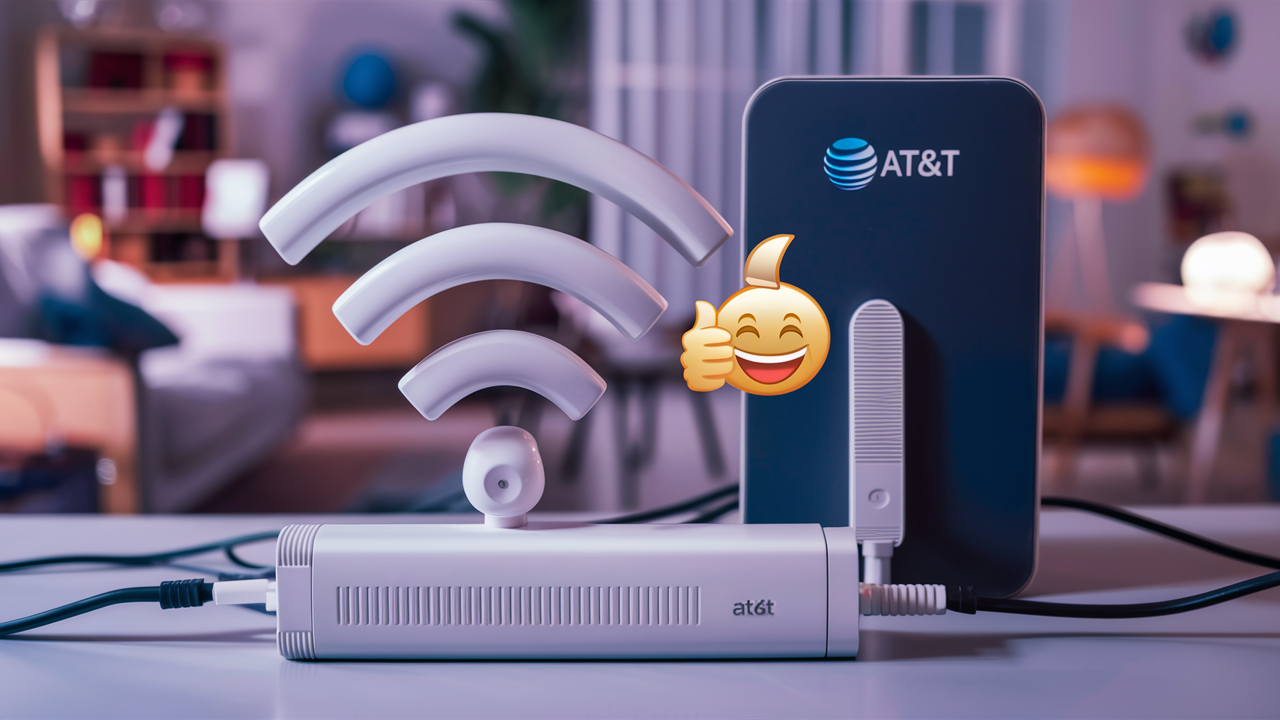
Yes, you can absolutely use a WiFi extender with AT&T Fiber. WiFi extenders are designed to connect to any existing WiFi network, regardless of the Internet Service Provider (ISP) or the type of internet service (fiber, cable, DSL, etc.). They work by picking up the existing WiFi signal from your AT&T gateway and rebroadcasting it to cover areas where the original signal is weak or non-existent. This means you can effectively expand the coverage area of your AT&T Fiber WiFi without needing to replace your AT&T equipment.
The compatibility is not specific to AT&T Fiber; any standard WiFi extender will function with any standard WiFi router or gateway. The primary requirement is that the extender can connect to your existing WiFi network's SSID (network name) and password. Therefore, if you have AT&T Fiber and are experiencing WiFi coverage issues, a WiFi extender is a viable and often effective solution.
How WiFi Extenders Work with AT&T Fiber
WiFi extenders, also known as WiFi boosters or repeaters, operate on a simple principle: they act as a bridge between your AT&T gateway and the dead zones in your home. Here's a breakdown of the process:
1. Connection to the Source: The WiFi extender is placed strategically in your home, ideally in a location that receives a strong signal from your AT&T gateway but is still within range of the area you want to cover. You then configure the extender to connect to your existing AT&T WiFi network. This usually involves accessing the extender's setup interface via a web browser or a mobile app and selecting your AT&T network's name (SSID) and entering its password.
2. Signal Reception: Once connected, the extender receives the WiFi signal broadcast by your AT&T gateway. It essentially acts as a client device to your main router.
3. Signal Amplification and Rebroadcasting: The extender then amplifies this received signal and rebroadcasts it. This creates a new WiFi network (or extends the existing one, depending on the extender's settings) with a wider reach. Many extenders will create a new network name (SSID) that is often a variation of your original network name (e.g., "MyNetwork_EXT"). Some advanced extenders allow you to use the same SSID as your main network, which can simplify device connections but might sometimes lead to connection issues if not configured properly.
4. Device Connectivity: Devices like smartphones, laptops, and smart home gadgets in the extended coverage area can then connect to the WiFi signal broadcast by the extender, thereby gaining access to your AT&T Fiber internet connection.
Important Note on Speed: It's crucial to understand that WiFi extenders, by their nature, can sometimes reduce your internet speed. This is because they have to receive the signal and then retransmit it, which involves a processing step. For older or basic extenders, this can lead to a significant speed reduction, potentially halving the speed in the extended area. Newer, dual-band or tri-band extenders, and especially mesh WiFi systems (which we'll discuss later), are designed to mitigate this speed loss more effectively.
Benefits of Using a WiFi Extender with AT&T Fiber
Integrating a WiFi extender into your AT&T Fiber setup offers several compelling advantages, particularly for users experiencing common WiFi challenges:
- Expanded Coverage: The most obvious benefit is eliminating WiFi dead zones. Whether it's a distant bedroom, a basement office, or a backyard patio, an extender can bring a stable WiFi signal to these previously underserved areas. This ensures you can enjoy the full benefits of your AT&T Fiber speeds throughout your entire property.
- Cost-Effective Solution: Compared to upgrading your entire AT&T gateway (which might not even be an option or could incur additional fees) or installing new Ethernet cabling throughout your home, a WiFi extender is a relatively inexpensive solution. Prices for decent extenders can range from $30 to $100, making it an accessible upgrade for most budgets.
- Easy Installation: Most modern WiFi extenders are designed for plug-and-play simplicity. The setup process typically involves a few clicks through a web interface or a mobile app, making it user-friendly even for those with limited technical expertise.
- Improved Connectivity for Multiple Devices: As more households rely on numerous connected devices – smartphones, tablets, smart TVs, gaming consoles, smart home gadgets – the demand on the WiFi network increases. An extender can help distribute this load and provide more stable connections for devices located further from the main router.
- Enhanced User Experience: Imagine streaming movies without buffering in the upstairs bedroom, participating in video calls without dropping connections in the home office, or playing online games on the patio. Extenders directly contribute to a smoother, more reliable online experience, allowing you to fully leverage the high-speed potential of your AT&T Fiber connection everywhere.
- Flexibility and Portability: WiFi extenders are not permanently installed. If you move furniture, redecorate, or find a better spot for optimal coverage, you can simply unplug the extender and move it. This flexibility is a significant advantage over wired solutions.
For 2025-26, the demand for seamless connectivity continues to grow with the proliferation of high-bandwidth applications like 4K/8K streaming, cloud gaming, and immersive virtual reality experiences. AT&T Fiber provides the necessary backbone, and extenders help ensure that this speed is accessible everywhere.
Potential Drawbacks and Considerations
While WiFi extenders are a great solution for many, it's important to be aware of their potential limitations and consider them carefully before making a purchase. Understanding these drawbacks will help you manage expectations and choose the right solution for your specific needs.
1. Speed Reduction: As mentioned earlier, the most common drawback is a potential reduction in internet speed. Because the extender receives and then retransmits the signal, there's an inherent overhead. Older or less sophisticated extenders might cut your speed by 50% or more in the extended area. Newer dual-band or tri-band models and those using dedicated backhaul (like in mesh systems) perform much better, but some reduction is still possible.
2. Network Complexity: When using an extender that creates a separate SSID (e.g., "MyNetwork_EXT"), devices might not automatically switch to the stronger signal as you move around your house. You might need to manually reconnect your devices to the extender's network when you're in its coverage area. This can be inconvenient.
3. Placement is Crucial: The effectiveness of an extender heavily depends on its placement. If you place it too far from the AT&T gateway, it will receive a weak signal and rebroadcast that weak signal, offering little improvement. If you place it too close, it won't extend the coverage significantly. Finding the "sweet spot" requires some trial and error.
4. Interference: WiFi signals can be affected by interference from other electronic devices (microwaves, cordless phones, Bluetooth devices) and physical obstructions (thick walls, metal objects, large appliances). An extender can also be susceptible to this interference, potentially degrading its performance.
5. Firmware Updates: Like any electronic device, extenders may require firmware updates to improve performance, security, and compatibility. You'll need to ensure you can access the extender's settings to perform these updates.
6. Not a Replacement for a Good Router: An extender cannot fix fundamental issues with your main AT&T gateway's WiFi performance. If your gateway is old or underpowered, an extender might only offer marginal improvements. In such cases, investing in a more robust mesh WiFi system or a high-quality standalone router might be a better long-term solution.
7. Potential for Lag in Gaming/Real-time Applications: Due to the extra hop the data has to take through the extender, there can be a slight increase in latency. For casual browsing and streaming, this is usually unnoticeable. However, for competitive online gaming or real-time video conferencing, this added latency could be a concern.
Table 1: Extender vs. Other Solutions - Key Differences (2025-26 Outlook)
| Feature | WiFi Extender | Mesh WiFi System | Powerline Adapter | Wired Connection (Ethernet) |
|---|---|---|---|---|
| Primary Function | Rebroadcasts existing WiFi signal | Creates a single, seamless WiFi network | Uses electrical wiring to transmit network data | Direct physical connection for data transfer |
| Coverage Expansion | Good for medium to large homes | Excellent for large homes, multi-story, complex layouts | Variable, depends on wiring quality | Limited to where cables can be run |
| Speed Performance | Can reduce speed (especially older models) | Minimal speed loss, often maintains near-router speeds | Variable, can be significantly impacted by wiring | Highest potential speed, minimal loss |
| Ease of Setup | Generally easy | Moderately easy | Very easy | Requires running cables |
| Cost (Typical Range) | $30 - $100 | $150 - $500+ | $40 - $100 | Cost of cables and installation |
| Network Management | Can create separate SSIDs, manual switching | Single SSID, seamless roaming | Typically acts as a WiFi access point or bridge | Direct connection, no WiFi management |
| Best For | Small to medium dead zones, budget-conscious users | Large homes, eliminating all dead zones, seamless experience | Bridging gaps where WiFi is weak, but wiring is difficult | Stationary devices needing highest speed/reliability (PCs, consoles, TVs) |
Choosing the Right WiFi Extender for AT&T Fiber
With a plethora of WiFi extenders on the market, selecting the best one for your AT&T Fiber setup requires careful consideration. Here are the key factors to evaluate:
1. WiFi Standards (802.11ac, 802.11ax/WiFi 6):
- 802.11ac (WiFi 5): This is the most common standard and offers good performance for most users. It operates on both 2.4 GHz and 5 GHz bands, providing flexibility.
- 802.11ax (WiFi 6): The latest standard, WiFi 6, offers faster speeds, better efficiency in congested environments, and improved handling of multiple devices. If your AT&T gateway and devices support WiFi 6, investing in a WiFi 6 extender will future-proof your network and offer the best performance. For 2025-26, WiFi 6 and WiFi 6E are becoming increasingly prevalent.
2. Dual-Band vs. Tri-Band:
- Dual-Band: These extenders broadcast on both the 2.4 GHz and 5 GHz bands. This is generally sufficient for most homes.
- Tri-Band: These offer an additional band, often dedicated solely for communication between the extender and the router (a dedicated backhaul). This significantly reduces the speed loss associated with extenders and is a feature found in more advanced models and mesh systems.
3. Speed Ratings: Extenders are often advertised with AC or AX ratings (e.g., AC1200, AX3000). These numbers indicate the theoretical maximum combined speed across all bands. While not always achievable in real-world scenarios, a higher rating generally suggests better performance. Look for ratings that are at least comparable to your AT&T Fiber plan's speeds, understanding that you won't get the full speed through the extender.
4. Ethernet Ports: Some extenders come with one or more Ethernet ports. This allows you to connect wired devices (like a desktop computer or gaming console) directly to the extender, providing a stable wired connection even in areas far from your router. This can be a valuable feature if you have stationary devices that require consistent high speeds.
5. Ease of Setup and Management: Look for extenders with intuitive setup processes, often guided by a mobile app. Features like WPS (Wi-Fi Protected Setup) can simplify the initial connection, though a manual setup often provides more control.
6. Brand Reputation and Reviews: Stick with reputable brands known for reliable networking equipment, such as TP-Link, Netgear, Linksys, and ASUS. Read user reviews to get real-world insights into performance, reliability, and ease of use.
7. Specific AT&T Gateway Compatibility (Generally Not an Issue): While most extenders are universally compatible, it's always a good idea to check if the manufacturer has any known compatibility issues with specific AT&T gateway models. However, this is rare, as extenders connect to the WiFi signal, not the gateway's internal workings.
Example Recommendations (2025-26):
- Budget-Friendly: TP-Link RE300 AC1200 WiFi Extender. Offers good dual-band coverage for its price.
- Mid-Range Performance: Netgear Nighthawk X4S AC2300 WiFi Extender (EX7300). Provides faster speeds and a dedicated backhaul option for better performance.
- High-Performance/WiFi 6: TP-Link AX3000 WiFi 6 Extender (RE505X). Delivers the benefits of WiFi 6 for newer devices and a more robust connection.
Setting Up Your WiFi Extender with AT&T Fiber
The setup process for a WiFi extender with your AT&T Fiber network is generally straightforward. While specific steps may vary slightly between brands, the core procedure remains consistent. Here’s a general step-by-step guide:
Step 1: Choose the Optimal Location for Your Extender
This is arguably the most critical step for success. Place your extender halfway between your AT&T gateway and the area where you're experiencing weak WiFi. The extender needs to receive a strong enough signal from the gateway to rebroadcast effectively. Avoid placing it in a dead zone itself.
Step 2: Power On the Extender
Plug the WiFi extender into a power outlet in your chosen location. Wait for it to boot up, which usually takes a minute or two. The indicator lights on the extender will typically show its status.
Step 3: Connect to the Extender's Network (Initial Setup)
Your computer or smartphone will need to connect to the extender's temporary setup network. This network often has a name like "TP-Link_Extender_XXXX" or "NETGEAR_EXT." You can find this network name in your device's WiFi settings. Some extenders also have a dedicated mobile app that guides you through the setup.
Step 4: Access the Extender's Configuration Interface
Once connected to the extender's setup network, open a web browser (like Chrome, Firefox, or Safari) on your connected device. Type the extender's default IP address or configuration URL into the address bar. This is usually something like 192.168.0.254, 192.168.1.250, or a specific web address provided in the extender's manual (e.g., tplinkrepeater.net, mywifiext.net). You may be prompted to create an administrator password for the extender.
Step 5: Scan for and Select Your AT&T WiFi Network
Within the extender's configuration interface, you'll find an option to scan for available WiFi networks. Select your AT&T Fiber network's SSID (the name of your AT&T WiFi network). If you have a dual-band router, you might need to configure both the 2.4 GHz and 5 GHz bands.
Step 6: Enter Your AT&T WiFi Password
You will be prompted to enter the password for your AT&T WiFi network. Ensure you enter it accurately. This allows the extender to authenticate with your AT&T gateway.
Step 7: Configure the Extender's Network Name (SSID)
You typically have two options for the extender's network name:
- Use the same SSID as your main network: This is often preferred for seamless roaming, as your devices won't need to manually switch networks. However, some extenders might struggle with this, and you might experience connection drops.
- Create a new SSID: This usually involves appending "_EXT" or "_Booster" to your original SSID (e.g., "MyAT&T_EXT"). This clearly identifies the extended network but requires you to manually connect devices to it when in its coverage range.
For 2025-26, many newer extenders and mesh systems offer improved single SSID functionality.
Step 8: Save Settings and Reboot
Once you've configured the network name and password, save your settings. The extender will likely reboot to apply the changes. The indicator lights should change to show a successful connection to your AT&T network.
Step 9: Test the Extended Coverage
Move your device (laptop, smartphone) to the area where you previously had weak WiFi. Connect to the extender's network (either your original SSID or the new one, depending on your configuration). Test your internet speed and stability. You may need to adjust the extender's position slightly for optimal performance.
Using WPS (Wi-Fi Protected Setup) - An Alternative Method:
Some extenders support WPS. This can simplify setup:
- Plug in the extender.
- Press the WPS button on your AT&T gateway.
- Within two minutes, press the WPS button on the extender.
- The devices should connect automatically.
Note that WPS can sometimes be less reliable or secure than a manual setup, and not all AT&T gateways have a readily accessible WPS button.
Alternatives to WiFi Extenders for AT&T Fiber
While WiFi extenders are a popular and often effective solution, they are not the only way to improve WiFi coverage with AT&T Fiber. Depending on your home's size, layout, and your specific needs, other options might be more suitable:
1. Mesh WiFi Systems:
Mesh WiFi systems are often considered the premium solution for whole-home WiFi coverage. They consist of a main router and one or more satellite "nodes" that work together to create a single, seamless WiFi network. Unlike extenders, mesh systems are designed from the ground up for extended coverage and typically offer:
- Single Network Name (SSID): Your devices connect to one network, and the system intelligently hands off your connection to the strongest node as you move around.
- Dedicated Backhaul: Many mesh systems use a dedicated wireless channel (or wired Ethernet) for communication between nodes, significantly reducing speed loss.
- Advanced Features: They often come with robust mobile apps for easy setup, network management, parental controls, and security features.
- Scalability: You can add more nodes to expand coverage further.
Mesh systems are generally more expensive than basic extenders but offer superior performance and user experience, especially for larger homes or those with complex layouts. Popular brands include Eero, Google Nest Wifi, TP-Link Deco, and Netgear Orbi. For 2025-26, WiFi 6 and WiFi 6E mesh systems are the standard for high-performance home networking.
2. Powerline Adapters:
Powerline adapters use your home's existing electrical wiring to transmit network data. You plug one adapter into an outlet near your AT&T gateway and connect it via Ethernet. The second adapter is plugged into an outlet in the area needing coverage, and it can either provide an Ethernet port or broadcast a new WiFi signal (if it's a WiFi-enabled powerline adapter).
- Pros: Can be effective in areas where WiFi signals struggle due to thick walls. Easy to set up.
- Cons: Performance heavily depends on the quality and complexity of your home's electrical wiring. Performance can degrade significantly if adapters are on different electrical circuits or if the wiring is old. WiFi-enabled adapters can sometimes be less powerful than dedicated extenders.
3. Wired Ethernet Backhaul (for Mesh Systems or Access Points):
The most reliable and highest-performing solution is to run Ethernet cables from your AT&T gateway to strategic locations in your home. These cables can then be used to connect:
- Mesh Nodes: Many mesh systems allow you to connect nodes via Ethernet (wired backhaul), which provides the fastest and most stable connection between them.
- Wireless Access Points (APs): You can install dedicated WiFi access points that are hardwired back to your router. This creates strong, reliable WiFi coverage in specific areas.
While this requires more effort and potentially professional installation, it eliminates wireless bottlenecks and provides the best possible speeds and stability. For users with AT&T Fiber's top-tier speeds, especially those with 1 Gbps or higher plans, wired backhaul is often the preferred method for maximizing performance.
4. Upgrading Your AT&T Gateway (Limited Options):
In some cases, AT&T might offer newer gateway models with improved WiFi capabilities. However, AT&T generally controls the gateway equipment, and upgrading might not always be straightforward or offer significant WiFi improvements beyond what a dedicated solution can provide. It's worth checking with AT&T support if you suspect your current gateway is the primary bottleneck.
Table 2: Comparing Alternatives for AT&T Fiber WiFi Coverage (2025-26)
| Solution | Best For | Pros | Cons | Typical Cost |
|---|---|---|---|---|
| WiFi Extender | Medium-sized homes, filling specific dead zones, budget-conscious users. | Affordable, easy setup, expands existing WiFi. | Can reduce speed, placement critical, potential network complexity. | $30 - $100 |
| Mesh WiFi System | Large homes, multi-story houses, eliminating all dead zones, seamless roaming. | Whole-home coverage, single SSID, intelligent roaming, strong performance. | More expensive, can be overkill for small homes. | $150 - $500+ |
| Powerline Adapters | Bridging gaps where WiFi is weak, but electrical wiring is reliable. | Uses existing wiring, easy setup, can bypass some physical obstructions. | Performance depends on wiring quality, can be inconsistent. | $40 - $100 |
| Wired Ethernet Backhaul (Mesh/AP) | Maximizing speed and reliability for demanding users, large/complex homes. | Highest speed and stability, eliminates wireless bottlenecks. | Requires running cables, more complex installation. | Varies (cables, potentially installation costs) |
Troubleshooting Common Issues
Even with the best setup, you might encounter issues when using a WiFi extender with your AT&T Fiber service. Here are some common problems and their solutions:
1. Extender Not Connecting to AT&T Network:
- Check Password: Ensure you've entered the correct WiFi password for your AT&T network. Passwords are case-sensitive.
- Signal Strength: Move the extender closer to your AT&T gateway. The signal might be too weak at its current location.
- Network Name (SSID): Make sure you've selected the correct SSID for your AT&T network.
- Reboot Devices: Try rebooting both your AT&T gateway and the WiFi extender.
- Firmware Update: Check for firmware updates for your extender.
2. Slow Speeds in the Extended Area:
- Placement: The extender might be too far from the gateway, receiving a weak signal. Try moving it closer.
- Interference: Ensure the extender isn't placed near other electronics that could cause interference.
- Extender Bandwidth: If you have a dual-band extender, ensure your devices are connecting to the 5 GHz band for faster speeds when possible.
- Extender Limitations: Understand that some speed reduction is normal. If speeds are drastically low, consider a more powerful extender or a mesh system.
- Check AT&T Gateway: Ensure your AT&T gateway is performing optimally. Reboot it if necessary.
3. Devices Not Connecting to the Extender:
- Network Name: If the extender is broadcasting a new SSID (e.g., "MyAT&T_EXT"), ensure your device is trying to connect to that specific network.
- Reboot Devices: Sometimes, simply forgetting and rejoining the WiFi network on your device can resolve connection issues.
- Extender Reboot: Reboot the extender itself.
- Single SSID Issues: If you're using the same SSID for both the gateway and the extender, devices might struggle to switch. Try temporarily disabling WiFi on your AT&T gateway to force devices to connect to the extender, then re-enable it.
4. Frequent Disconnections:
- Placement: The extender might be in a location with an intermittent signal from the gateway.
- Interference: Other wireless devices could be causing interference.
- Overloaded Network: If too many devices are connected to the extender, it might become overloaded.
- Firmware: Ensure both your AT&T gateway and the extender have the latest firmware.
5. Extender Not Showing Up in Setup:
- Factory Reset: Perform a factory reset on the extender (usually by holding a reset button for 10-15 seconds).
- Different Device: Try using a different device (laptop, tablet, phone) for the setup process.
- Browser Cache: Clear your browser's cache and cookies.
When to Contact Support:
If you've tried these troubleshooting steps and are still experiencing persistent issues, it might be time to contact the manufacturer of your WiFi extender for support. If you suspect the problem lies with your AT&T Fiber service itself, contact AT&T customer support.
The Future of WiFi Coverage with AT&T Fiber
The landscape of home networking is constantly evolving, and the way we achieve robust WiFi coverage with high-speed internet services like AT&T Fiber is no exception. As internet speeds continue to increase and the number of connected devices in our homes grows exponentially, the demand for seamless, high-performance WiFi will only intensify.
Dominance of WiFi 6E and WiFi 7: By 2025-26, WiFi 6E is becoming mainstream, and WiFi 7 is on the horizon, offering even greater speeds, lower latency, and improved capacity through the use of the 6 GHz band and advanced technologies. AT&T Fiber's high-speed capabilities are perfectly positioned to take advantage of these next-generation WiFi standards. Future extenders and mesh systems will increasingly adopt these technologies, providing more efficient and faster wireless distribution of your fiber internet.
Intelligent Network Management: We're seeing a shift towards more intelligent network management. AI-powered mesh systems and routers will be able to dynamically optimize network performance, predict congestion, and automatically adjust settings to ensure the best possible connection for every device. This means less manual configuration and a more "set it and forget it" experience for users.
Integration with Smart Homes: As smart home ecosystems become more integrated, the need for reliable WiFi coverage extends beyond traditional devices. Everything from smart appliances to security systems and home automation hubs will rely on a stable wireless connection. Future solutions will need to handle this increased density and demand efficiently.
The Role of Wired Backhaul: While wireless technology advances, wired connections will remain the gold standard for performance and reliability. As fiber speeds push beyond what even WiFi 7 can consistently deliver across a large area, the importance of strategic Ethernet cabling and wired backhaul for mesh nodes and access points will likely grow, especially for power users and those with the highest AT&T Fiber speed tiers.
AT&T's Role: AT&T will continue to upgrade its fiber infrastructure, ensuring that the "pipe" delivering internet to homes is capable of meeting future demands. While they provide the gateway, the responsibility for in-home WiFi distribution will continue to be a collaborative effort between AT&T's equipment and third-party networking solutions like extenders, mesh systems, and advanced routers.
In essence, the future of WiFi coverage with AT&T Fiber is about creating a unified, intelligent, and high-performance network that seamlessly delivers the full potential of fiber internet to every corner of your home, no matter how many devices you have connected or what you're doing online.
Conclusion
To directly answer the question: Yes, you can absolutely use a WiFi extender with AT&T Fiber. In fact, it's a practical and often cost-effective solution for combating WiFi dead zones and ensuring that the impressive speeds of your AT&T Fiber connection reach every room in your house. Extenders work by capturing your existing WiFi signal from your AT&T gateway and rebroadcasting it, effectively widening your network's reach.
While extenders are generally compatible with any ISP's service, including AT&T Fiber, it's crucial to choose the right one. Opt for modern standards like WiFi 6 (802.11ax) for better performance, consider dual-band or tri-band models for reduced speed loss, and pay attention to placement for optimal results. Be aware that some speed reduction is inherent in extender technology, especially with older models.
For those seeking a more robust and seamless solution, especially in larger homes, mesh WiFi systems offer superior performance and a single, unified network. However, for targeted coverage improvements and budget-conscious users, a well-chosen WiFi extender remains an excellent option. By understanding the benefits, potential drawbacks, and how to properly set up and troubleshoot your extender, you can significantly enhance your home's WiFi experience and fully leverage the power of your AT&T Fiber internet.