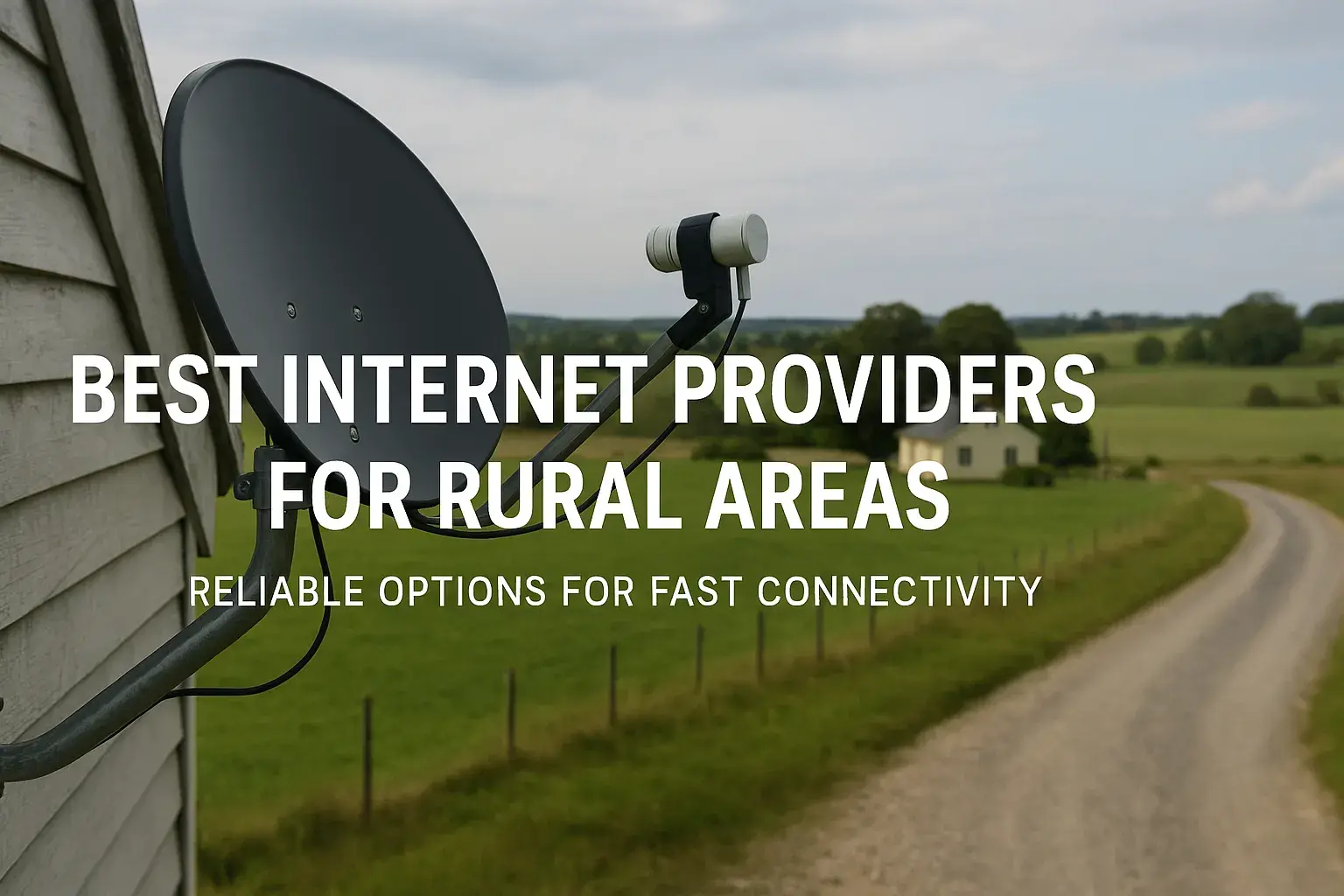
Finding reliable, fast internet in rural areas can feel like searching for a needle in a haystack. This guide breaks down the best internet providers and technologies available in 2025, offering practical solutions for consistent connectivity, no matter where you live.
Understanding Rural Internet Challenges
The digital divide remains a significant hurdle for many rural communities. Unlike densely populated urban centers where infrastructure development is often more economically viable, rural areas face unique challenges that impact internet availability and quality. These include vast geographical distances, lower population density, challenging terrain, and the high cost associated with deploying and maintaining broadband networks over large, sparsely populated regions. Consequently, many rural residents experience slower speeds, unreliable connections, and limited provider choices compared to their urban counterparts. The Federal Communications Commission (FCC) has identified millions of unserved and underserved households, with a disproportionate number residing in rural America. These challenges not only affect personal use, such as streaming and online communication, but also hinder economic development, remote work opportunities, telehealth services, and educational access. Addressing these issues requires innovative solutions and a commitment to expanding broadband infrastructure.
Geographical Barriers and Infrastructure Costs
The sheer scale of rural landscapes presents a formidable obstacle. Laying fiber optic cables, the gold standard for high-speed internet, across miles of farmland, forests, or mountains is exponentially more expensive per household than in a city block. The return on investment for telecommunication companies is often perceived as lower, discouraging widespread infrastructure deployment. This economic reality means that many rural areas are left with outdated or insufficient internet technologies, or no options at all.
Population Density and Market Viability
Internet service providers (ISPs) rely on a sufficient customer base to justify the significant capital expenditure required for network build-out and maintenance. In areas with fewer potential subscribers per square mile, the cost per customer for service delivery becomes prohibitively high. This economic principle often leads to a lack of competition, leaving rural consumers with limited choices and potentially higher prices for slower service.
Terrain and Environmental Factors
Rugged terrain, dense forests, and extreme weather conditions can further complicate the installation and maintenance of internet infrastructure. Poles may need to be erected in difficult-to-access locations, and underground cables can be susceptible to damage from natural elements. These factors add to the overall cost and complexity of providing reliable internet service in rural settings.
The Digital Divide and Its Impact
The consequences of this digital divide are far-reaching. Residents in underserved rural areas often struggle to access essential online services, participate in the digital economy, or benefit from the educational and healthcare advancements that require robust internet connectivity. This disparity can exacerbate existing inequalities and limit the potential for growth and development within these communities. Initiatives aimed at closing this gap are crucial for ensuring equitable access to information and opportunities for all Americans.
Types of Rural Internet Connectivity
Fortunately, advancements in technology have provided several viable options for rural internet access, each with its own set of advantages and disadvantages. Understanding these technologies is the first step toward finding the best solution for your specific needs and location. As of 2025, the most prevalent and promising options include satellite internet, fixed wireless, DSL, cable (where available), and increasingly, mobile hotspots leveraging 4G LTE and 5G networks.
Satellite Internet
Satellite internet has long been a go-to solution for the most remote areas. It involves a dish installed at your home that communicates with a satellite orbiting Earth. This satellite then relays data to and from ground stations connected to the internet backbone. While it offers near-universal coverage, it historically suffered from high latency, slower speeds, and data caps. However, newer satellite constellations are dramatically improving performance.
Fixed Wireless
Fixed wireless internet uses radio signals to transmit data between a provider's tower and a receiver antenna installed at your home or business. It's often a good middle ground, offering better speeds and lower latency than traditional satellite, and can be deployed more quickly and cost-effectively than laying fiber in many rural scenarios. It requires a clear line of sight between your location and the provider's tower.
DSL (Digital Subscriber Line)
DSL internet uses existing copper telephone lines to deliver broadband. While it's been around for decades, its speeds are highly dependent on the distance from the telephone company's central office. In rural areas, where these distances can be significant, DSL speeds can be quite slow, often falling below what's considered broadband by modern standards. However, for some, it might be the only wired option available.
Cable Internet
Cable internet, which uses the same coaxial cables that deliver cable television, offers higher speeds than DSL and is generally more reliable. However, its availability in rural areas is often limited, as it requires extensive cable infrastructure. Where it is available, it can be a strong contender for rural broadband.
Mobile Hotspots and 4G/5G
With the expansion of 4G LTE and the rollout of 5G networks, mobile internet has become an increasingly viable option for rural users. Using a cellular modem or a mobile hotspot device, you can access the internet via the cellular network. Performance depends heavily on cellular signal strength and network congestion. 5G, in particular, promises significantly faster speeds and lower latency, potentially transforming rural connectivity.
Key Factors When Choosing a Provider
Selecting the right internet provider for your rural home involves more than just looking at advertised speeds. Several critical factors need careful consideration to ensure you get a service that meets your needs and expectations. As of 2025, these considerations are more important than ever, given the evolving landscape of rural broadband solutions.
Speed and Performance
Advertised speeds are often "up to" and can vary significantly based on network conditions, time of day, and your specific location. For streaming, video conferencing, and online gaming, higher download and upload speeds are crucial. Consider your household's typical internet usage. Do you have multiple users streaming simultaneously? Do you work from home and require reliable video calls? These questions will help determine the minimum speed you need. Look for providers that offer consistent performance, not just peak speeds. Many providers now offer speed tests on their websites, and independent reviews can offer insights into real-world performance.
Reliability and Uptime
For rural areas, reliability is often more important than raw speed. An internet connection that frequently drops or experiences outages can be incredibly frustrating and disruptive. Satellite internet, for instance, can be affected by weather, while fixed wireless can be impacted by obstructions or tower issues. DSL and cable are generally more stable but depend on the condition of the physical lines. Check provider guarantees and reviews regarding uptime. A connection that is consistently available, even if slightly slower, is often preferable to one that is fast but unreliable.
Data Caps and Usage Limits
Many rural internet plans, especially satellite and some fixed wireless options, come with data caps. Exceeding these caps can result in throttled speeds or expensive overage charges. In 2025, unlimited data plans are becoming more common, but it's essential to verify the terms of service. If you stream a lot of video, download large files, or have multiple users in your household, a plan with generous or unlimited data is a must. Carefully review your typical monthly data usage to avoid surprises.
Cost and Contract Terms
The monthly cost is a significant factor, but it's also important to look beyond the introductory price. Understand the full cost, including equipment rental fees, installation charges, and any potential price increases after an initial promotional period. Many providers require long-term contracts, often 12 or 24 months. Breaking a contract early can incur substantial penalties. Always read the fine print and ensure you are comfortable with the contract duration and terms before signing up. Consider the total cost of ownership over the contract period.
Customer Service and Support
When you encounter issues, responsive and knowledgeable customer support is invaluable, especially in rural areas where technical issues might be more complex. Research the provider's reputation for customer service. Are they easy to reach? Do they offer local support? Online reviews and consumer reports can provide insights into customer satisfaction with their support channels. Good customer service can make a significant difference in your overall experience.
Availability in Your Specific Location
This is perhaps the most crucial step. Not all providers or technologies are available in every rural area. You'll need to check availability directly with each provider for your specific address. Many providers have online tools that allow you to enter your ZIP code or full address to see what plans are offered. Don't rely on general availability maps; always verify for your exact location. This often involves calling the provider or using their online portal.
Top Internet Providers for Rural Areas in 2025
Navigating the landscape of rural internet providers requires a tailored approach, as the "best" option is highly dependent on your specific location and needs. In 2025, several providers stand out for their efforts in serving rural communities, offering a range of technologies from advanced satellite to fixed wireless and even leveraging cellular networks. Here's a look at some of the leading contenders, keeping in mind that availability is paramount.
Starlink (SpaceX)
Technology: Low Earth Orbit (LEO) Satellite Internet Pros: Significantly lower latency and higher speeds compared to traditional geostationary satellites, near-global availability, no hard data caps (though fair use policies apply), relatively easy self-installation. Cons: Higher upfront equipment cost, potential for occasional latency spikes during satellite handoffs, performance can be affected by obstructions (trees, buildings), monthly cost can be higher than some terrestrial options. 2025 Outlook: Starlink continues to expand its satellite constellation, promising improved speeds and reliability. It has become a game-changer for many previously underserved rural areas, offering speeds that rival some wired connections. It's often the top choice for those with no other high-speed options. Typical speeds range from 50-200 Mbps download and 10-20 Mbps upload.
HughesNet
Technology: Geostationary Satellite Internet Pros: Wide availability across most of North America, fixed monthly price, various plans to suit different needs. Cons: Higher latency than LEO satellites, speeds can be slower, data caps are strictly enforced, performance can be impacted by weather. 2025 Outlook: HughesNet remains a reliable option for very remote areas where other services are unavailable. While it doesn't match Starlink's performance, it offers a stable connection for basic internet tasks. Typical speeds are around 25-100 Mbps download and 1-3 Mbps upload, with strict data allowances.
Viasat
Technology: Geostationary Satellite Internet Pros: Offers some of the highest data allowances among satellite providers, competitive pricing on certain plans, broad availability. Cons: Latency is a factor, speeds can be inconsistent, especially during peak hours, weather can affect service. 2025 Outlook: Viasat is another established satellite provider that continues to innovate. They offer plans with significant data allowances, making them attractive for users who consume a lot of data but are limited to satellite. Typical speeds are in the 25-150 Mbps download range, with upload speeds around 2-5 Mbps.
Frontier Communications
Technology: DSL, Fiber (limited rural availability) Pros: If fiber is available, it offers top-tier speeds and reliability. DSL is more widely available than fiber in rural areas and can be more affordable than satellite. Cons: Fiber availability is scarce in truly rural areas. DSL speeds degrade significantly with distance from the central office, often resulting in slow performance. 2025 Outlook: Frontier is actively expanding its fiber network where feasible, but for many rural residents, DSL remains the primary offering. It's worth checking for fiber availability, but be prepared for slower DSL speeds if that's the only option. DSL speeds can range from 5 Mbps to 100+ Mbps depending on proximity to the CO.
CenturyLink (Lumen Technologies)
Technology: DSL, Fiber (limited rural availability) Pros: Similar to Frontier, offers DSL in many rural areas and is investing in fiber expansion. Known for offering some unlimited DSL plans. Cons: DSL performance is distance-dependent and can be slow. Fiber is not widely available in remote locations. 2025 Outlook: CenturyLink provides a crucial lifeline for many rural areas with its DSL service. While not always the fastest, it offers a consistent connection for essential online activities. Check for their fiber options, but DSL is more likely to be available. Speeds vary widely, from 10 Mbps to 100 Mbps for DSL.
Rise Broadband
Technology: Fixed Wireless Pros: Offers competitive speeds for fixed wireless, often with no data caps, faster deployment than wired options, lower latency than satellite. Cons: Requires a line of sight to their towers, availability is geographically limited to specific rural and suburban areas they serve. 2025 Outlook: Rise Broadband is a significant player in the fixed wireless market, expanding its reach into many underserved communities. They often provide speeds comparable to cable or DSL, making them a strong alternative to satellite. Typical speeds can range from 25 Mbps to over 100 Mbps download.
AT&T Internet (Fixed Wireless, DSL, Fiber)
Technology: DSL, Fiber, Fixed Wireless (AT&T Internet Air) Pros: A major provider with a broad footprint. Offers a mix of DSL, fiber (where available), and increasingly, fixed wireless solutions for rural areas. Cons: Fiber availability is limited in truly remote locations. DSL speeds can be slow. Fixed wireless availability varies. 2025 Outlook: AT&T is investing in expanding its network, including fixed wireless solutions like AT&T Internet Air, designed to bring broadband to rural homes. Their diverse offerings mean it's worth checking availability for all their technologies. Speeds vary widely by technology, from 10 Mbps for DSL to 1 Gbps for fiber.
T-Mobile Home Internet / Verizon 5G Home Internet
Technology: 5G Home Internet Pros: Uses existing 5G cellular networks, often no data caps, relatively simple setup, competitive pricing, potentially very high speeds. Cons: Availability is limited to areas with strong 5G coverage, performance can be affected by network congestion and signal strength. 2025 Outlook: These services are rapidly expanding and represent a significant shift in rural broadband. If you have strong 5G coverage, these can offer speeds and reliability that were previously unimaginable for rural areas, often without long-term contracts. Typical speeds can range from 75 Mbps to over 300 Mbps download.
Note: Availability for all providers is highly localized. Always use their online tools or call to check service at your specific address.
Satellite Internet: A Closer Look
Satellite internet has historically been the primary solution for the most remote rural locations, bridging the gap where terrestrial infrastructure simply cannot reach. While traditional satellite internet has faced criticism for its limitations, newer technologies are rapidly changing the game, making it a more competitive option than ever before. In 2025, understanding the nuances of satellite technology is crucial for anyone in a hard-to-reach area.
How Satellite Internet Works
The fundamental principle involves a small satellite dish installed on your property that communicates with a satellite orbiting the Earth. This satellite acts as a relay, sending and receiving data between your home and a ground station connected to the internet backbone. The journey of data is: your device -> your modem/router -> satellite dish -> satellite in space -> ground station -> internet -> ground station -> satellite in space -> satellite dish -> your modem/router -> your device. This multi-step process is what contributes to latency.
Geostationary vs. Low Earth Orbit (LEO) Satellites
There are two main types of satellite internet:
Geostationary (GEO) Satellites: These satellites orbit at an altitude of approximately 22,000 miles above the Earth. Providers like HughesNet and Viasat primarily use GEO satellites. Because they are so far away, the signal takes a longer path, resulting in higher latency (the delay between sending a request and receiving a response). This latency can make real-time applications like online gaming or high-definition video conferencing challenging.
Low Earth Orbit (LEO) Satellites: Newer providers, most notably SpaceX's Starlink, utilize LEO satellites that orbit much closer to Earth, typically between 300 and 1,200 miles up. This closer proximity dramatically reduces latency, often bringing it down to levels comparable to terrestrial broadband. LEO constellations involve thousands of smaller satellites working together, requiring a constant handoff between satellites as they move across the sky.
Pros of Satellite Internet
Near-Universal Availability: This is the biggest advantage. If you can see the sky, you can likely get satellite internet. It's the only option for many extremely remote rural locations.
Improved Speeds (LEO): LEO satellite services like Starlink offer speeds that can rival or exceed DSL and even some cable connections, making streaming, browsing, and working from home much more feasible.
No Landline Required: Unlike DSL, satellite internet does not require a traditional phone line.
Fixed Pricing (some providers): Some GEO providers offer fixed monthly costs, making budgeting easier.
Cons of Satellite Internet
Latency (GEO): High latency from GEO satellites remains a significant drawback for real-time interactive applications.
Data Caps: Many satellite plans, especially from GEO providers, come with strict data caps. Exceeding these can lead to throttled speeds or extra charges. Starlink has moved away from hard caps but has a "priority data" system.
Weather Interference: Heavy rain, snow, or dense clouds can temporarily disrupt satellite signals, leading to slower speeds or outages.
Upfront Equipment Costs: The satellite dish and modem can be expensive to purchase outright, though many providers offer rental options. Starlink's upfront cost is notably higher than traditional satellite providers.
Line of Sight Requirements: The satellite dish needs a clear, unobstructed view of the sky. Trees, buildings, or even excessive snow accumulation can interfere with the signal.
2025 Trends in Satellite Internet
The satellite internet landscape is dynamic. Starlink's LEO service continues to mature, offering more consistent performance and expanding its service areas. Other LEO constellations are also in development. Providers are also exploring ways to offer more flexible data plans and improve their ground infrastructure to handle increasing demand. For many rural residents, satellite internet, particularly LEO options, has transitioned from a last resort to a genuinely viable high-speed solution.
Fixed Wireless: Bridging the Gap
Fixed wireless internet has emerged as a powerful and increasingly popular solution for rural broadband, offering a compelling alternative to satellite and often outperforming DSL where available. It leverages wireless technology to deliver internet access directly to a home or business, bypassing the need for extensive underground cabling.
How Fixed Wireless Works
Fixed wireless operates similarly to a cellular network but is designed for stationary connections. A provider installs antennas on elevated locations, such as towers or tall buildings, to broadcast an internet signal. At your home, a small antenna or receiver is mounted on the exterior, typically on the roof or side of the house, and pointed towards the provider's tower. This receiver then connects to your home network via an Ethernet cable, powering your router and devices. The key requirement is a clear line of sight between your receiver and the provider's broadcast antenna. Obstructions like dense trees or hills can degrade or block the signal.
Pros of Fixed Wireless
Faster Speeds Than DSL: In many cases, fixed wireless can deliver speeds comparable to or better than DSL, and sometimes even rivaling cable or fiber, especially in areas where those technologies are not yet deployed.
Lower Latency Than Satellite: Because the signal travels a much shorter distance compared to satellite, fixed wireless offers significantly lower latency, making it much better suited for video conferencing, online gaming, and VoIP calls.
No Data Caps (Often): Many fixed wireless providers offer unlimited data plans, which is a major advantage for households with high internet usage.
Quicker Deployment: Compared to laying fiber optic cables, deploying fixed wireless infrastructure can be much faster and more cost-effective, allowing providers to reach rural areas more rapidly.
More Affordable Than Satellite (Often): While upfront costs for equipment may apply, the monthly service fees for fixed wireless are often lower than those for satellite internet, especially when considering the higher data allowances.
Cons of Fixed Wireless
Line of Sight Requirement: This is the most significant limitation. If there are obstructions between your home and the provider's tower, fixed wireless may not be a viable option or performance will be significantly degraded.
Geographically Limited Availability: Fixed wireless providers typically focus on specific rural and suburban areas where they have established infrastructure. It's not as universally available as satellite.
Performance Can Vary: While generally reliable, performance can be affected by extreme weather conditions or signal interference if the line of sight is not perfect. Network congestion can also impact speeds during peak usage times.
Equipment Installation: While often a self-install option, some providers may require professional installation, which can add to the initial cost.
2025 Trends in Fixed Wireless
The fixed wireless sector is experiencing robust growth as providers recognize its potential to serve unserved and underserved rural areas efficiently. Advancements in wireless technology are enabling higher frequencies and more sophisticated antenna systems, leading to faster speeds and improved reliability. Many smaller, regional providers are actively expanding their networks, offering competitive alternatives to larger national carriers. As 5G technology matures, we may also see fixed wireless solutions leveraging 5G infrastructure, further enhancing speeds and capabilities.
DSL and Cable: Still Relevant?
While newer technologies like satellite and fixed wireless often capture the spotlight for rural internet solutions, traditional wired technologies like DSL and cable still play a role, albeit a diminishing one in some areas. Their relevance in rural settings hinges on proximity to infrastructure and the availability of upgrades.
DSL (Digital Subscriber Line)
How it Works: DSL utilizes existing copper telephone lines to transmit internet data. It works by using frequencies on the phone line that are higher than those used for voice calls, allowing for simultaneous internet and phone use. Pros:
Wide Availability: Telephone lines are present in most developed areas, including many rural locations.
Affordability: DSL plans are often among the most affordable options.
Reliability: Generally stable as it's a wired connection, less susceptible to weather than wireless.
Cons:
Speed Limitations: The biggest drawback. DSL speeds are heavily dependent on the distance from the telephone company's central office (CO). The farther away you are, the slower the speeds. Many rural DSL connections offer speeds well below the FCC's definition of broadband (25 Mbps download / 3 Mbps upload).
Upload Speeds: Upload speeds are typically much slower than download speeds.
Infrastructure Decay: Older copper lines can degrade over time, affecting performance.
2025 Outlook: DSL remains a fallback option for many rural residents. While not ideal for heavy internet users, it can be sufficient for basic browsing, email, and occasional streaming. Providers like AT&T and CenturyLink continue to offer DSL, and some are investing in upgrades to offer higher-speed DSL variants (like VDSL) where feasible.
Cable Internet
How it Works: Cable internet uses the same coaxial cable network that delivers cable television. Data is transmitted over these cables, offering significantly higher speeds than DSL. Pros:
Higher Speeds: Cable internet typically offers much faster download speeds than DSL, often reaching hundreds of Mbps.
Lower Latency: Wired connection means lower latency compared to satellite.
No Phone Line Required: Unlike DSL, you don't need a traditional phone line.
Cons:
Limited Rural Availability: The primary limitation. Building out cable infrastructure across vast rural areas is extremely expensive, so availability is often restricted to more populated rural towns or suburban fringes.
Shared Bandwidth: Cable internet is a shared medium. During peak hours, when many neighbors are online, speeds can slow down.
2025 Outlook: Where available, cable internet is an excellent choice for rural homes. Providers like Xfinity (Comcast) and Spectrum may offer service in some rural pockets. However, for the most remote areas, cable is rarely an option. It's always worth checking for availability, as it can provide a robust and fast connection.
For many rural dwellers, the choice between DSL and cable comes down to availability. If cable is an option, it's generally preferable due to its superior speed. If not, DSL might be the only wired solution, and its performance will be highly location-dependent.
Mobile Hotspots and Emerging 5G
The rapid expansion of cellular networks, particularly 4G LTE and the burgeoning 5G technology, has opened up new avenues for rural internet access. For many, a mobile hotspot or a dedicated 5G home internet service can provide a surprisingly robust and flexible connection, often without the long-term contracts or installation complexities of traditional ISPs.
Using Mobile Hotspots
How it Works: Most smartphones today can function as mobile hotspots, creating a Wi-Fi network using their cellular data connection. You can connect laptops, tablets, and other devices to this hotspot. Alternatively, dedicated mobile hotspot devices (MiFi devices) can be purchased, offering a more robust and dedicated Wi-Fi signal. Pros:
Portability: Ideal for users who need internet access on the go or have a primary home and a secondary rural location.
No Installation: Simply activate the feature on your phone or turn on the hotspot device.
Flexibility: Can be a good temporary solution or a primary connection if cellular signal is strong.
Cons:
Data Limits: Most mobile plans have data caps, and using a hotspot can quickly consume your allowance, leading to overage charges or throttled speeds. Some carriers offer "unlimited" hotspot data, but it's often throttled after a certain threshold.
Speed and Reliability: Performance is entirely dependent on the cellular signal strength and network congestion in your area. Dead zones or overloaded towers can render it unusable.
Battery Drain: Using your phone as a hotspot drains its battery quickly.
Device Limitations: Some carriers limit the number of devices that can connect to a hotspot.
2025 Outlook: Mobile hotspots remain a valuable tool for supplemental or temporary rural internet. However, relying on them as a primary, high-usage connection can be expensive and inconsistent due to data caps and signal variability.
5G Home Internet
How it Works: Major carriers like T-Mobile and Verizon are leveraging their 5G cellular networks to offer fixed wireless home internet services. Instead of using a mobile hotspot, these services use dedicated 5G receivers installed in your home, which connect to the nearest 5G tower. Pros:
High Speeds: 5G technology is capable of delivering very high download speeds, often rivaling fiber optic connections.
Low Latency: Significantly lower latency than 4G or satellite, making it suitable for gaming and video conferencing.
No Data Caps (Often): Many 5G home internet plans offer unlimited data, removing the worry of overage charges.
Easy Setup: Typically involves a simple plug-and-play setup with a gateway device.
No Long-Term Contracts: Many providers offer month-to-month plans, providing flexibility.
Cons:
Availability is Key: This is the biggest hurdle. 5G home internet is only available in areas with robust 5G network coverage, which is still expanding, especially in rural regions.
Signal Strength: Performance depends on the strength and quality of the 5G signal reaching your home. Obstructions can impact speeds.
Potential for Congestion: Like any cellular network, 5G can experience congestion during peak usage times, though it's generally more resilient than 4G.
2025 Outlook: 5G home internet is one of the most exciting developments for rural broadband. As 5G networks continue to be built out, these services will become increasingly available and offer a compelling alternative to traditional ISPs. T-Mobile Home Internet and Verizon 5G Home Internet are leading the charge, and it's essential to check their availability maps for your specific address.
For rural residents, exploring 5G home internet options should be a top priority if coverage is available in their area. It offers a blend of speed, affordability, and flexibility that is hard to match.
Installation and Setup Process
The installation and setup process for rural internet can vary significantly depending on the technology and provider. Understanding what to expect can help you prepare and ensure a smoother transition to your new service. As of 2025, while some technologies offer simple self-installation, others may require professional assistance.
Self-Installation
Technologies: Starlink, some fixed wireless providers, 5G Home Internet, mobile hotspots. Process:
Equipment Delivery: The provider ships the necessary equipment (e.g., satellite dish, modem, router, 5G gateway) directly to your home.
Placement: You'll be guided, often through a mobile app, to find the optimal location for your equipment. For satellite, this means a clear view of the sky. For fixed wireless or 5G, it means positioning the receiver or gateway for the best signal strength.
Connection: Connect the equipment to power and, if necessary, to your existing router or your new provided router. For Starlink, this involves connecting the dish to the router. For 5G, it's plugging in the gateway.
Activation: Follow on-screen prompts or use a mobile app to activate your service. This usually involves connecting to the device's Wi-Fi and logging into your account.
Pros: Saves on installation fees, convenient, can be done at your own pace. Cons: Requires some technical aptitude, potential for errors if not followed carefully.
Professional Installation
Technologies: Some fixed wireless providers, DSL, Cable, traditional satellite installations (less common now). Process:
Scheduling: You'll schedule an appointment with a technician.
Site Survey: The technician may conduct a site survey to determine the best placement for equipment and the most efficient way to run cables.
Equipment Mounting: The technician will professionally mount any external equipment (e.g., fixed wireless antenna, satellite dish) and run necessary cables into your home.
Configuration: They will set up the modem/router, configure your network, and test the connection.
Customer Walkthrough: The technician will explain the setup and ensure you understand how to use the service.
Pros: Ensures correct installation, professional troubleshooting, handles complex wiring. Cons: Incurs an installation fee, requires scheduling an appointment, may involve waiting periods.
Key Considerations for Installation
Clear Line of Sight: For satellite and fixed wireless, ensure there are no obstructions (trees, buildings) in the path of the signal.
Power Source: All equipment will need access to a power outlet.
Router Placement: If using your own router, consider its placement for optimal Wi-Fi coverage throughout your home.
Existing Wiring: For DSL and cable, the technician will connect to existing service entry points.
Always confirm the installation process with your chosen provider. Many rural ISPs understand the unique challenges and offer support to make the setup as straightforward as possible.
Troubleshooting Common Rural Internet Issues
Even with the best providers, rural internet connections can sometimes experience issues. Understanding common problems and their potential solutions can save you time and frustration. As of 2025, these issues often relate to signal strength, equipment, or network congestion.
Slow Speeds
Possible Causes:
Network Congestion: Too many users on the network, especially during peak hours (evenings, weekends).
Signal Strength: For wireless technologies (satellite, fixed wireless, 5G), a weak signal can lead to slower speeds.
Obstructions: Trees growing, new construction, or weather blocking the signal path.
Equipment Issues: An old or malfunctioning modem/router.
Distance from Source (DSL): If you have DSL, your distance from the central office is a major factor.
Data Throttling: Exceeding data caps on some plans.
Solutions:
Restart Equipment: Unplug your modem and router for 30 seconds, then plug them back in.
Test at Different Times: Check speeds during off-peak hours to see if congestion is the issue.
Check Signal Strength: Use provider apps or diagnostic tools to assess signal quality. Adjust antenna positioning if possible (fixed wireless).
Clear Obstructions: Trim trees or ensure clear line of sight for wireless dishes/antennas.
Upgrade Equipment: Consider a newer modem or router if yours is outdated.
Contact Provider: If speeds are consistently slow and don't improve, contact your ISP.
Review Data Usage: Ensure you're not exceeding data caps.
Intermittent Connection / Dropped Signals
Possible Causes:
Weather: Heavy rain, snow, or storms can affect satellite and fixed wireless signals.
Loose Cables/Connections: Physical connections can become loose over time.
Equipment Overheating: Modems and routers can overheat, causing them to shut down temporarily.
Interference: Other wireless devices or electrical interference.
Provider Network Issues: Temporary outages or maintenance on the ISP's network.
Solutions:
Check Physical Connections: Ensure all cables are securely plugged in.
Monitor Weather: Understand if weather is the primary cause.
Ensure Ventilation: Make sure your modem/router has adequate airflow.
Test with a Wired Connection: Connect a computer directly to the modem via Ethernet to rule out Wi-Fi issues.
Check Provider Status: Look for outage notifications from your ISP.
Contact Provider: If the issue persists, it may indicate a problem with the line or equipment.
Inability to Connect
Possible Causes:
Equipment Malfunction: Modem or router failure.
Service Outage: The provider's network is down.
Billing Issues: Service may be suspended due to non-payment.
Incorrect Network Settings: Wi-Fi password entered incorrectly, or network configuration issues.
Solutions:
Restart Equipment: Always the first step.
Verify Network Details: Double-check Wi-Fi password and network name.
Check Provider Website/App: Look for outage maps or status updates.
Contact Provider: To confirm service status and check for billing issues.
High Latency (Ping)
Possible Causes:
Satellite Technology: High latency is inherent to geostationary satellite internet.
Network Congestion: Can increase ping times.
Distance: Longer distances for data to travel.
Router Issues: An overloaded or malfunctioning router.
Solutions:
Use LEO Satellite or Fixed Wireless: If latency is critical, consider upgrading to these technologies.
Limit Bandwidth-Heavy Activities: Reduce simultaneous streaming or large downloads.
Optimize Router: Ensure your router is functioning optimally.
When troubleshooting, systematically work through these potential causes. If you're unsure, don't hesitate to contact your internet provider's customer support. They have diagnostic tools that can help pinpoint the problem.
The Future of Rural Broadband
The landscape of rural internet access is undergoing a significant transformation, driven by technological innovation, increased government investment, and a growing recognition of the essential nature of broadband connectivity. As we look towards the future, several key trends and developments are poised to further bridge the digital divide for rural communities.
Continued Expansion of Fiber Optics
While expensive, fiber optic cable remains the gold standard for internet speed, reliability, and capacity. Government initiatives and private investments are continuing to fund fiber build-outs in underserved rural areas. Projects like the USDA's ReConnect program and state-level broadband initiatives are making significant progress in bringing fiber deeper into rural America. As fiber deployment accelerates, more rural residents will gain access to multi-gigabit speeds.
Advancements in Satellite Technology
Low Earth Orbit (LEO) satellite constellations, led by Starlink, have already revolutionized rural internet. This trend is set to continue, with more LEO providers entering the market and existing ones enhancing their services. Expect further improvements in speed, reductions in latency, and potentially more competitive pricing as the technology matures and competition increases. Satellite internet will remain a critical solution for the most remote locations where terrestrial infrastructure is impractical.
Ubiquitous 5G and Fixed Wireless Evolution
The rollout of 5G technology is not just about mobile phones; it's a significant enabler of rural broadband. 5G fixed wireless access (FWA) offers a compelling alternative to wired connections, providing high speeds and low latency without the need for physical cables. As 5G coverage expands into rural areas, these services will become more widespread and reliable. Fixed wireless technology, in general, will continue to evolve, utilizing higher frequencies and more advanced antenna technologies to deliver faster and more robust connections.
Government Investment and Policy
Recognizing broadband as essential infrastructure, governments at federal, state, and local levels are prioritizing its expansion. Funding programs, grants, and tax incentives are designed to encourage ISPs to invest in rural areas. Policies aimed at increasing competition and promoting transparency in pricing and availability will also play a crucial role in ensuring that rural residents have access to affordable, high-quality internet.
Innovative Solutions and Partnerships
Beyond traditional ISPs, innovative approaches are emerging. Community-owned broadband networks, public-private partnerships, and the use of emerging technologies like TV white space and advanced Wi-Fi mesh networks are all contributing to expanding connectivity options. These solutions often cater to specific local needs and can be more agile in addressing connectivity gaps.
Focus on Affordability and Digital Literacy
As availability improves, the focus will increasingly shift to affordability and digital literacy. Programs aimed at subsidizing internet costs for low-income households (like the Affordable Connectivity Program) will be vital. Furthermore, initiatives to improve digital skills and provide access to devices will ensure that rural residents can fully leverage the benefits of high-speed internet once it becomes available.
The future of rural broadband is bright, characterized by a diverse range of technologies and increasing accessibility. While challenges remain, the trajectory points towards a future where reliable, fast internet is not a luxury but a standard utility for all rural Americans.
Conclusion
Securing reliable and fast internet in rural areas in 2025 is more achievable than ever, thanks to a blend of evolving technologies and dedicated providers. From the game-changing LEO satellite services like Starlink to robust fixed wireless options, the days of accepting slow, unreliable connections are fading. While DSL and cable may still serve some, the future for most rural residents lies in wireless advancements and continued fiber expansion. Carefully evaluating your specific needs—speed, reliability, data usage, and budget—against the availability in your precise location is the most critical step. Don't overlook the potential of 5G home internet if your area has coverage. By understanding the options and the key factors for selection, you can find a solution that keeps you connected and empowers you to work, learn, and engage in the digital world, no matter how remote your home may be.